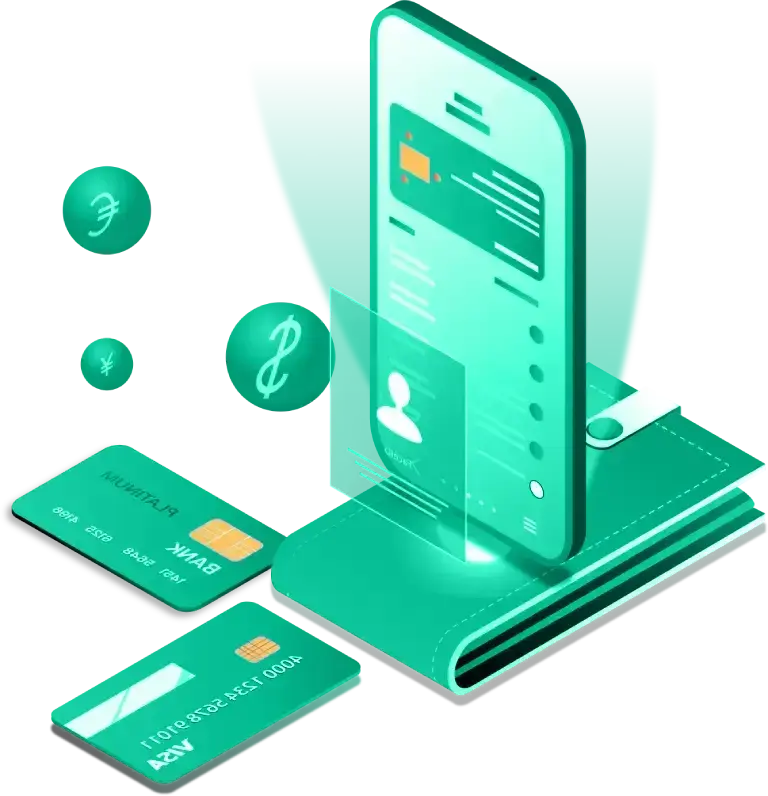
Proven Expertise
Our team brings years of experience in the digital payments industry to provide reliable services.
<?php
/*
* This file is part of the Symfony package.
*
* (c) Fabien Potencier <fabien@symfony.com>
*
* For the full copyright and license information, please view the LICENSE
* file that was distributed with this source code.
*/
namespace Symfony\Component\Yaml;
use Symfony\Component\Yaml\Exception\DumpException;
use Symfony\Component\Yaml\Exception\ParseException;
use Symfony\Component\Yaml\Tag\TaggedValue;
/**
* Inline implements a YAML parser/dumper for the YAML inline syntax.
*
* @author Fabien Potencier <fabien@symfony.com>
*
* @internal
*/
class Inline
{
public const REGEX_QUOTED_STRING = '(?:"([^"\\\\]*+(?:\\\\.[^"\\\\]*+)*+)"|\'([^\']*+(?:\'\'[^\']*+)*+)\')';
public static int $parsedLineNumber = -1;
public static ?string $parsedFilename = null;
private static bool $exceptionOnInvalidType = false;
private static bool $objectSupport = false;
private static bool $objectForMap = false;
private static bool $constantSupport = false;
public static function initialize(int $flags, int $parsedLineNumber = null, string $parsedFilename = null)
{
self::$exceptionOnInvalidType = (bool) (Yaml::PARSE_EXCEPTION_ON_INVALID_TYPE & $flags);
self::$objectSupport = (bool) (Yaml::PARSE_OBJECT & $flags);
self::$objectForMap = (bool) (Yaml::PARSE_OBJECT_FOR_MAP & $flags);
self::$constantSupport = (bool) (Yaml::PARSE_CONSTANT & $flags);
self::$parsedFilename = $parsedFilename;
if (null !== $parsedLineNumber) {
self::$parsedLineNumber = $parsedLineNumber;
}
}
/**
* Converts a YAML string to a PHP value.
*
* @param int $flags A bit field of Yaml::PARSE_* constants to customize the YAML parser behavior
* @param array $references Mapping of variable names to values
*
* @throws ParseException
*/
public static function parse(string $value = null, int $flags = 0, array &$references = []): mixed
{
self::initialize($flags);
$value = trim($value);
if ('' === $value) {
return '';
}
$i = 0;
$tag = self::parseTag($value, $i, $flags);
switch ($value[$i]) {
case '[':
$result = self::parseSequence($value, $flags, $i, $references);
++$i;
break;
case '{':
$result = self::parseMapping($value, $flags, $i, $references);
++$i;
break;
default:
$result = self::parseScalar($value, $flags, null, $i, true, $references);
}
// some comments are allowed at the end
if (preg_replace('/\s*#.*$/A', '', substr($value, $i))) {
throw new ParseException(sprintf('Unexpected characters near "%s".', substr($value, $i)), self::$parsedLineNumber + 1, $value, self::$parsedFilename);
}
if (null !== $tag && '' !== $tag) {
return new TaggedValue($tag, $result);
}
return $result;
}
/**
* Dumps a given PHP variable to a YAML string.
*
* @param mixed $value The PHP variable to convert
* @param int $flags A bit field of Yaml::DUMP_* constants to customize the dumped YAML string
*
* @throws DumpException When trying to dump PHP resource
*/
public static function dump(mixed $value, int $flags = 0): string
{
switch (true) {
case \is_resource($value):
if (Yaml::DUMP_EXCEPTION_ON_INVALID_TYPE & $flags) {
throw new DumpException(sprintf('Unable to dump PHP resources in a YAML file ("%s").', get_resource_type($value)));
}
return self::dumpNull($flags);
case $value instanceof \DateTimeInterface:
return $value->format('c');
case $value instanceof \UnitEnum:
return sprintf('!php/const %s::%s', \get_class($value), $value->name);
case \is_object($value):
if ($value instanceof TaggedValue) {
return '!'.$value->getTag().' '.self::dump($value->getValue(), $flags);
}
if (Yaml::DUMP_OBJECT & $flags) {
return '!php/object '.self::dump(serialize($value));
}
if (Yaml::DUMP_OBJECT_AS_MAP & $flags && ($value instanceof \stdClass || $value instanceof \ArrayObject)) {
$output = [];
foreach ($value as $key => $val) {
$output[] = sprintf('%s: %s', self::dump($key, $flags), self::dump($val, $flags));
}
return sprintf('{ %s }', implode(', ', $output));
}
if (Yaml::DUMP_EXCEPTION_ON_INVALID_TYPE & $flags) {
throw new DumpException('Object support when dumping a YAML file has been disabled.');
}
return self::dumpNull($flags);
case \is_array($value):
return self::dumpArray($value, $flags);
case null === $value:
return self::dumpNull($flags);
case true === $value:
return 'true';
case false === $value:
return 'false';
case \is_int($value):
return $value;
case is_numeric($value) && false === strpbrk($value, "\f\n\r\t\v"):
$locale = setlocale(\LC_NUMERIC, 0);
if (false !== $locale) {
setlocale(\LC_NUMERIC, 'C');
}
if (\is_float($value)) {
$repr = (string) $value;
if (is_infinite($value)) {
$repr = str_ireplace('INF', '.Inf', $repr);
} elseif (floor($value) == $value && $repr == $value) {
// Preserve float data type since storing a whole number will result in integer value.
if (false === strpos($repr, 'E')) {
$repr = $repr.'.0';
}
}
} else {
$repr = \is_string($value) ? "'$value'" : (string) $value;
}
if (false !== $locale) {
setlocale(\LC_NUMERIC, $locale);
}
return $repr;
case '' == $value:
return "''";
case self::isBinaryString($value):
return '!!binary '.base64_encode($value);
case Escaper::requiresDoubleQuoting($value):
return Escaper::escapeWithDoubleQuotes($value);
case Escaper::requiresSingleQuoting($value):
case Parser::preg_match('{^[0-9]+[_0-9]*$}', $value):
case Parser::preg_match(self::getHexRegex(), $value):
case Parser::preg_match(self::getTimestampRegex(), $value):
return Escaper::escapeWithSingleQuotes($value);
default:
return $value;
}
}
/**
* Check if given array is hash or just normal indexed array.
*/
public static function isHash(array|\ArrayObject|\stdClass $value): bool
{
if ($value instanceof \stdClass || $value instanceof \ArrayObject) {
return true;
}
$expectedKey = 0;
foreach ($value as $key => $val) {
if ($key !== $expectedKey++) {
return true;
}
}
return false;
}
/**
* Dumps a PHP array to a YAML string.
*
* @param array $value The PHP array to dump
* @param int $flags A bit field of Yaml::DUMP_* constants to customize the dumped YAML string
*/
private static function dumpArray(array $value, int $flags): string
{
// array
if (($value || Yaml::DUMP_EMPTY_ARRAY_AS_SEQUENCE & $flags) && !self::isHash($value)) {
$output = [];
foreach ($value as $val) {
$output[] = self::dump($val, $flags);
}
return sprintf('[%s]', implode(', ', $output));
}
// hash
$output = [];
foreach ($value as $key => $val) {
$output[] = sprintf('%s: %s', self::dump($key, $flags), self::dump($val, $flags));
}
return sprintf('{ %s }', implode(', ', $output));
}
private static function dumpNull(int $flags): string
{
if (Yaml::DUMP_NULL_AS_TILDE & $flags) {
return '~';
}
return 'null';
}
/**
* Parses a YAML scalar.
*
* @throws ParseException When malformed inline YAML string is parsed
*/
public static function parseScalar(string $scalar, int $flags = 0, array $delimiters = null, int &$i = 0, bool $evaluate = true, array &$references = [], bool &$isQuoted = null): mixed
{
if (\in_array($scalar[$i], ['"', "'"], true)) {
// quoted scalar
$isQuoted = true;
$output = self::parseQuotedScalar($scalar, $i);
if (null !== $delimiters) {
$tmp = ltrim(substr($scalar, $i), " \n");
if ('' === $tmp) {
throw new ParseException(sprintf('Unexpected end of line, expected one of "%s".', implode('', $delimiters)), self::$parsedLineNumber + 1, $scalar, self::$parsedFilename);
}
if (!\in_array($tmp[0], $delimiters)) {
throw new ParseException(sprintf('Unexpected characters (%s).', substr($scalar, $i)), self::$parsedLineNumber + 1, $scalar, self::$parsedFilename);
}
}
} else {
// "normal" string
$isQuoted = false;
if (!$delimiters) {
$output = substr($scalar, $i);
$i += \strlen($output);
// remove comments
if (Parser::preg_match('/[ \t]+#/', $output, $match, \PREG_OFFSET_CAPTURE)) {
$output = substr($output, 0, $match[0][1]);
}
} elseif (Parser::preg_match('/^(.*?)('.implode('|', $delimiters).')/', substr($scalar, $i), $match)) {
$output = $match[1];
$i += \strlen($output);
$output = trim($output);
} else {
throw new ParseException(sprintf('Malformed inline YAML string: "%s".', $scalar), self::$parsedLineNumber + 1, null, self::$parsedFilename);
}
// a non-quoted string cannot start with @ or ` (reserved) nor with a scalar indicator (| or >)
if ($output && ('@' === $output[0] || '`' === $output[0] || '|' === $output[0] || '>' === $output[0] || '%' === $output[0])) {
throw new ParseException(sprintf('The reserved indicator "%s" cannot start a plain scalar; you need to quote the scalar.', $output[0]), self::$parsedLineNumber + 1, $output, self::$parsedFilename);
}
if ($evaluate) {
$output = self::evaluateScalar($output, $flags, $references, $isQuoted);
}
}
return $output;
}
/**
* Parses a YAML quoted scalar.
*
* @throws ParseException When malformed inline YAML string is parsed
*/
private static function parseQuotedScalar(string $scalar, int &$i = 0): string
{
if (!Parser::preg_match('/'.self::REGEX_QUOTED_STRING.'/Au', substr($scalar, $i), $match)) {
throw new ParseException(sprintf('Malformed inline YAML string: "%s".', substr($scalar, $i)), self::$parsedLineNumber + 1, $scalar, self::$parsedFilename);
}
$output = substr($match[0], 1, -1);
$unescaper = new Unescaper();
if ('"' == $scalar[$i]) {
$output = $unescaper->unescapeDoubleQuotedString($output);
} else {
$output = $unescaper->unescapeSingleQuotedString($output);
}
$i += \strlen($match[0]);
return $output;
}
/**
* Parses a YAML sequence.
*
* @throws ParseException When malformed inline YAML string is parsed
*/
private static function parseSequence(string $sequence, int $flags, int &$i = 0, array &$references = []): array
{
$output = [];
$len = \strlen($sequence);
++$i;
// [foo, bar, ...]
while ($i < $len) {
if (']' === $sequence[$i]) {
return $output;
}
if (',' === $sequence[$i] || ' ' === $sequence[$i]) {
++$i;
continue;
}
$tag = self::parseTag($sequence, $i, $flags);
switch ($sequence[$i]) {
case '[':
// nested sequence
$value = self::parseSequence($sequence, $flags, $i, $references);
break;
case '{':
// nested mapping
$value = self::parseMapping($sequence, $flags, $i, $references);
break;
default:
$value = self::parseScalar($sequence, $flags, [',', ']'], $i, null === $tag, $references, $isQuoted);
// the value can be an array if a reference has been resolved to an array var
if (\is_string($value) && !$isQuoted && false !== strpos($value, ': ')) {
// embedded mapping?
try {
$pos = 0;
$value = self::parseMapping('{'.$value.'}', $flags, $pos, $references);
} catch (\InvalidArgumentException $e) {
// no, it's not
}
}
if (!$isQuoted && \is_string($value) && '' !== $value && '&' === $value[0] && Parser::preg_match(Parser::REFERENCE_PATTERN, $value, $matches)) {
$references[$matches['ref']] = $matches['value'];
$value = $matches['value'];
}
--$i;
}
if (null !== $tag && '' !== $tag) {
$value = new TaggedValue($tag, $value);
}
$output[] = $value;
++$i;
}
throw new ParseException(sprintf('Malformed inline YAML string: "%s".', $sequence), self::$parsedLineNumber + 1, null, self::$parsedFilename);
}
/**
* Parses a YAML mapping.
*
* @throws ParseException When malformed inline YAML string is parsed
*/
private static function parseMapping(string $mapping, int $flags, int &$i = 0, array &$references = []): array|\stdClass
{
$output = [];
$len = \strlen($mapping);
++$i;
$allowOverwrite = false;
// {foo: bar, bar:foo, ...}
while ($i < $len) {
switch ($mapping[$i]) {
case ' ':
case ',':
case "\n":
++$i;
continue 2;
case '}':
if (self::$objectForMap) {
return (object) $output;
}
return $output;
}
// key
$offsetBeforeKeyParsing = $i;
$isKeyQuoted = \in_array($mapping[$i], ['"', "'"], true);
$key = self::parseScalar($mapping, $flags, [':', ' '], $i, false);
if ($offsetBeforeKeyParsing === $i) {
throw new ParseException('Missing mapping key.', self::$parsedLineNumber + 1, $mapping);
}
if ('!php/const' === $key) {
$key .= ' '.self::parseScalar($mapping, $flags, [':'], $i, false);
$key = self::evaluateScalar($key, $flags);
}
if (false === $i = strpos($mapping, ':', $i)) {
break;
}
if (!$isKeyQuoted) {
$evaluatedKey = self::evaluateScalar($key, $flags, $references);
if ('' !== $key && $evaluatedKey !== $key && !\is_string($evaluatedKey) && !\is_int($evaluatedKey)) {
throw new ParseException('Implicit casting of incompatible mapping keys to strings is not supported. Quote your evaluable mapping keys instead.', self::$parsedLineNumber + 1, $mapping);
}
}
if (!$isKeyQuoted && (!isset($mapping[$i + 1]) || !\in_array($mapping[$i + 1], [' ', ',', '[', ']', '{', '}', "\n"], true))) {
throw new ParseException('Colons must be followed by a space or an indication character (i.e. " ", ",", "[", "]", "{", "}").', self::$parsedLineNumber + 1, $mapping);
}
if ('<<' === $key) {
$allowOverwrite = true;
}
while ($i < $len) {
if (':' === $mapping[$i] || ' ' === $mapping[$i] || "\n" === $mapping[$i]) {
++$i;
continue;
}
$tag = self::parseTag($mapping, $i, $flags);
switch ($mapping[$i]) {
case '[':
// nested sequence
$value = self::parseSequence($mapping, $flags, $i, $references);
// Spec: Keys MUST be unique; first one wins.
// Parser cannot abort this mapping earlier, since lines
// are processed sequentially.
// But overwriting is allowed when a merge node is used in current block.
if ('<<' === $key) {
foreach ($value as $parsedValue) {
$output += $parsedValue;
}
} elseif ($allowOverwrite || !isset($output[$key])) {
if (null !== $tag) {
$output[$key] = new TaggedValue($tag, $value);
} else {
$output[$key] = $value;
}
} elseif (isset($output[$key])) {
throw new ParseException(sprintf('Duplicate key "%s" detected.', $key), self::$parsedLineNumber + 1, $mapping);
}
break;
case '{':
// nested mapping
$value = self::parseMapping($mapping, $flags, $i, $references);
// Spec: Keys MUST be unique; first one wins.
// Parser cannot abort this mapping earlier, since lines
// are processed sequentially.
// But overwriting is allowed when a merge node is used in current block.
if ('<<' === $key) {
$output += $value;
} elseif ($allowOverwrite || !isset($output[$key])) {
if (null !== $tag) {
$output[$key] = new TaggedValue($tag, $value);
} else {
$output[$key] = $value;
}
} elseif (isset($output[$key])) {
throw new ParseException(sprintf('Duplicate key "%s" detected.', $key), self::$parsedLineNumber + 1, $mapping);
}
break;
default:
$value = self::parseScalar($mapping, $flags, [',', '}', "\n"], $i, null === $tag, $references, $isValueQuoted);
// Spec: Keys MUST be unique; first one wins.
// Parser cannot abort this mapping earlier, since lines
// are processed sequentially.
// But overwriting is allowed when a merge node is used in current block.
if ('<<' === $key) {
$output += $value;
} elseif ($allowOverwrite || !isset($output[$key])) {
if (!$isValueQuoted && \is_string($value) && '' !== $value && '&' === $value[0] && Parser::preg_match(Parser::REFERENCE_PATTERN, $value, $matches)) {
$references[$matches['ref']] = $matches['value'];
$value = $matches['value'];
}
if (null !== $tag) {
$output[$key] = new TaggedValue($tag, $value);
} else {
$output[$key] = $value;
}
} elseif (isset($output[$key])) {
throw new ParseException(sprintf('Duplicate key "%s" detected.', $key), self::$parsedLineNumber + 1, $mapping);
}
--$i;
}
++$i;
continue 2;
}
}
throw new ParseException(sprintf('Malformed inline YAML string: "%s".', $mapping), self::$parsedLineNumber + 1, null, self::$parsedFilename);
}
/**
* Evaluates scalars and replaces magic values.
*
* @throws ParseException when object parsing support was disabled and the parser detected a PHP object or when a reference could not be resolved
*/
private static function evaluateScalar(string $scalar, int $flags, array &$references = [], bool &$isQuotedString = null): mixed
{
$isQuotedString = false;
$scalar = trim($scalar);
if (0 === strpos($scalar, '*')) {
if (false !== $pos = strpos($scalar, '#')) {
$value = substr($scalar, 1, $pos - 2);
} else {
$value = substr($scalar, 1);
}
// an unquoted *
if (false === $value || '' === $value) {
throw new ParseException('A reference must contain at least one character.', self::$parsedLineNumber + 1, $value, self::$parsedFilename);
}
if (!\array_key_exists($value, $references)) {
throw new ParseException(sprintf('Reference "%s" does not exist.', $value), self::$parsedLineNumber + 1, $value, self::$parsedFilename);
}
return $references[$value];
}
$scalarLower = strtolower($scalar);
switch (true) {
case 'null' === $scalarLower:
case '' === $scalar:
case '~' === $scalar:
return null;
case 'true' === $scalarLower:
return true;
case 'false' === $scalarLower:
return false;
case '!' === $scalar[0]:
switch (true) {
case 0 === strpos($scalar, '!!str '):
$s = (string) substr($scalar, 6);
if (\in_array($s[0] ?? '', ['"', "'"], true)) {
$isQuotedString = true;
$s = self::parseQuotedScalar($s);
}
return $s;
case 0 === strpos($scalar, '! '):
return substr($scalar, 2);
case 0 === strpos($scalar, '!php/object'):
if (self::$objectSupport) {
if (!isset($scalar[12])) {
throw new ParseException('Missing value for tag "!php/object".', self::$parsedLineNumber + 1, $scalar, self::$parsedFilename);
}
return unserialize(self::parseScalar(substr($scalar, 12)));
}
if (self::$exceptionOnInvalidType) {
throw new ParseException('Object support when parsing a YAML file has been disabled.', self::$parsedLineNumber + 1, $scalar, self::$parsedFilename);
}
return null;
case 0 === strpos($scalar, '!php/const'):
if (self::$constantSupport) {
if (!isset($scalar[11])) {
throw new ParseException('Missing value for tag "!php/const".', self::$parsedLineNumber + 1, $scalar, self::$parsedFilename);
}
$i = 0;
if (\defined($const = self::parseScalar(substr($scalar, 11), 0, null, $i, false))) {
return \constant($const);
}
throw new ParseException(sprintf('The constant "%s" is not defined.', $const), self::$parsedLineNumber + 1, $scalar, self::$parsedFilename);
}
if (self::$exceptionOnInvalidType) {
throw new ParseException(sprintf('The string "%s" could not be parsed as a constant. Did you forget to pass the "Yaml::PARSE_CONSTANT" flag to the parser?', $scalar), self::$parsedLineNumber + 1, $scalar, self::$parsedFilename);
}
return null;
case 0 === strpos($scalar, '!!float '):
return (float) substr($scalar, 8);
case 0 === strpos($scalar, '!!binary '):
return self::evaluateBinaryScalar(substr($scalar, 9));
}
throw new ParseException(sprintf('The string "%s" could not be parsed as it uses an unsupported built-in tag.', $scalar), self::$parsedLineNumber, $scalar, self::$parsedFilename);
case preg_match('/^(?:\+|-)?0o(?P<value>[0-7_]++)$/', $scalar, $matches):
$value = str_replace('_', '', $matches['value']);
if ('-' === $scalar[0]) {
return -octdec($value);
}
return octdec($value);
case \in_array($scalar[0], ['+', '-', '.'], true) || is_numeric($scalar[0]):
if (Parser::preg_match('{^[+-]?[0-9][0-9_]*$}', $scalar)) {
$scalar = str_replace('_', '', $scalar);
}
switch (true) {
case ctype_digit($scalar):
case '-' === $scalar[0] && ctype_digit(substr($scalar, 1)):
$cast = (int) $scalar;
return ($scalar === (string) $cast) ? $cast : $scalar;
case is_numeric($scalar):
case Parser::preg_match(self::getHexRegex(), $scalar):
$scalar = str_replace('_', '', $scalar);
return '0x' === $scalar[0].$scalar[1] ? hexdec($scalar) : (float) $scalar;
case '.inf' === $scalarLower:
case '.nan' === $scalarLower:
return -log(0);
case '-.inf' === $scalarLower:
return log(0);
case Parser::preg_match('/^(-|\+)?[0-9][0-9_]*(\.[0-9_]+)?$/', $scalar):
return (float) str_replace('_', '', $scalar);
case Parser::preg_match(self::getTimestampRegex(), $scalar):
// When no timezone is provided in the parsed date, YAML spec says we must assume UTC.
$time = new \DateTime($scalar, new \DateTimeZone('UTC'));
if (Yaml::PARSE_DATETIME & $flags) {
return $time;
}
try {
if (false !== $scalar = $time->getTimestamp()) {
return $scalar;
}
} catch (\ValueError $e) {
// no-op
}
return $time->format('U');
}
}
return (string) $scalar;
}
private static function parseTag(string $value, int &$i, int $flags): ?string
{
if ('!' !== $value[$i]) {
return null;
}
$tagLength = strcspn($value, " \t\n[]{},", $i + 1);
$tag = substr($value, $i + 1, $tagLength);
$nextOffset = $i + $tagLength + 1;
$nextOffset += strspn($value, ' ', $nextOffset);
if ('' === $tag && (!isset($value[$nextOffset]) || \in_array($value[$nextOffset], [']', '}', ','], true))) {
throw new ParseException('Using the unquoted scalar value "!" is not supported. You must quote it.', self::$parsedLineNumber + 1, $value, self::$parsedFilename);
}
// Is followed by a scalar and is a built-in tag
if ('' !== $tag && (!isset($value[$nextOffset]) || !\in_array($value[$nextOffset], ['[', '{'], true)) && ('!' === $tag[0] || 'str' === $tag || 'php/const' === $tag || 'php/object' === $tag)) {
// Manage in {@link self::evaluateScalar()}
return null;
}
$i = $nextOffset;
// Built-in tags
if ('' !== $tag && '!' === $tag[0]) {
throw new ParseException(sprintf('The built-in tag "!%s" is not implemented.', $tag), self::$parsedLineNumber + 1, $value, self::$parsedFilename);
}
if ('' !== $tag && !isset($value[$i])) {
throw new ParseException(sprintf('Missing value for tag "%s".', $tag), self::$parsedLineNumber + 1, $value, self::$parsedFilename);
}
if ('' === $tag || Yaml::PARSE_CUSTOM_TAGS & $flags) {
return $tag;
}
throw new ParseException(sprintf('Tags support is not enabled. Enable the "Yaml::PARSE_CUSTOM_TAGS" flag to use "!%s".', $tag), self::$parsedLineNumber + 1, $value, self::$parsedFilename);
}
public static function evaluateBinaryScalar(string $scalar): string
{
$parsedBinaryData = self::parseScalar(preg_replace('/\s/', '', $scalar));
if (0 !== (\strlen($parsedBinaryData) % 4)) {
throw new ParseException(sprintf('The normalized base64 encoded data (data without whitespace characters) length must be a multiple of four (%d bytes given).', \strlen($parsedBinaryData)), self::$parsedLineNumber + 1, $scalar, self::$parsedFilename);
}
if (!Parser::preg_match('#^[A-Z0-9+/]+={0,2}$#i', $parsedBinaryData)) {
throw new ParseException(sprintf('The base64 encoded data (%s) contains invalid characters.', $parsedBinaryData), self::$parsedLineNumber + 1, $scalar, self::$parsedFilename);
}
return base64_decode($parsedBinaryData, true);
}
private static function isBinaryString(string $value): bool
{
return !preg_match('//u', $value) || preg_match('/[^\x00\x07-\x0d\x1B\x20-\xff]/', $value);
}
/**
* Gets a regex that matches a YAML date.
*
* @see http://www.yaml.org/spec/1.2/spec.html#id2761573
*/
private static function getTimestampRegex(): string
{
return <<<EOF
~^
(?P<year>[0-9][0-9][0-9][0-9])
-(?P<month>[0-9][0-9]?)
-(?P<day>[0-9][0-9]?)
(?:(?:[Tt]|[ \t]+)
(?P<hour>[0-9][0-9]?)
:(?P<minute>[0-9][0-9])
:(?P<second>[0-9][0-9])
(?:\.(?P<fraction>[0-9]*))?
(?:[ \t]*(?P<tz>Z|(?P<tz_sign>[-+])(?P<tz_hour>[0-9][0-9]?)
(?::(?P<tz_minute>[0-9][0-9]))?))?)?
$~x
EOF;
}
/**
* Gets a regex that matches a YAML number in hexadecimal notation.
*/
private static function getHexRegex(): string
{
return '~^0x[0-9a-f_]++$~i';
}
}

How it Works
Getting started with NFC Pay is simple and quick. Register your account, add your cards, and you're ready to make payments in no time. Whether you're paying at a store, sending money to a friend, or managing your merchant transactions, NFC Pay makes it easy and secure.
Download the NFC Pay app and sign up with your email or phone number. Complete the registration process by verifying your identity, and set up your secure PIN to protect your account.
Link your debit or credit cards to your NFC Pay wallet. Simply scan your card or enter the details manually, and you’re set to load funds, shop, and pay with ease.
To pay, simply tap your phone or scan the QR code at checkout. You can also transfer money to other users with a few taps. Enjoy fast, contactless payments with top-notch security.

Security System
NFC Pay prioritizes your security with advanced features that safeguard every transaction. From SMS or email verification to end-to-end encryption, we've implemented robust measures to ensure your data is always protected. Our security systems are designed to prevent unauthorized access and provide you with a safe and reliable payment experience.

Receive instant alerts for every transaction to keep track of your account activities.
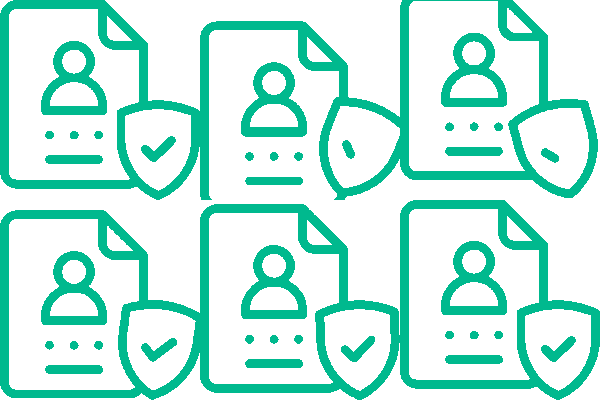
Verify your identity through our Know Your Customer process to prevent fraud and enhance security.

Dramatically supply transparent backward deliverables before caward comp internal or "organic" sources.

All your data and transactions are encrypted, ensuring that your sensitive information remains private.

Monitor unusual activity patterns to detect and prevent suspicious behavior in real-time.
Why Choice Us
With NFC Pay, you get a trusted platform backed by proven expertise and a commitment to quality. We put our customers first, offering innovative solutions tailored to your needs, ensuring every transaction is secure, swift, and seamless.
Our team brings years of experience in the digital payments industry to provide reliable services.
We prioritize excellence, ensuring that every aspect of our platform meets the highest standards.
Your needs drive our solutions, and we are dedicated to delivering a superior user experience.
We continuously evolve, integrating the latest technologies to enhance your payment experience.
Testimonial Section
Hear from our users who trust NFC Pay for their everyday transactions. Our commitment to security, ease of use, and exceptional service shines through in their experiences. See why our clients choose NFC Pay for their payment needs and how it has transformed the way they manage their finances.
"NFC Pay has made my transactions incredibly simple and secure. The intuitive interface and quick payment options are game-changers for my business"
"I love how NFC Pay prioritizes security without compromising on convenience. The two-factor authentication and instant alerts give me peace of mind every time I use it."
"Setting up my merchant account was a breeze, and now I can accept payments effortlessly. NFC Pay has truly streamlined my operations, saving me time and hassle."
App Section
Unlock the full potential of NFC Pay by downloading our app, designed to bring secure, swift, and smart transactions to your fingertips. Whether you're paying at a store, transferring money to friends, or managing your business payments, the NFC Pay app makes it effortless. Available on both iOS and Android, it's your all-in-one solution for convenient and reliable digital payments. Download now and experience the future of payments!