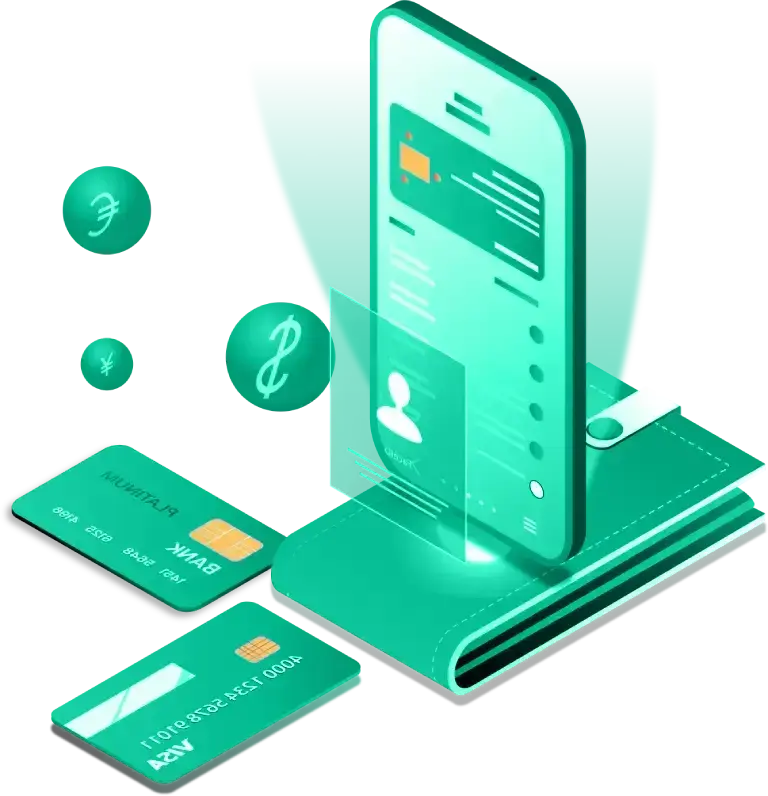
Proven Expertise
Our team brings years of experience in the digital payments industry to provide reliable services.
<?php

/*
 * This file is part of the Symfony package.
 *
 * (c) Fabien Potencier <fabien@symfony.com>
 *
 * For the full copyright and license information, please view the LICENSE
 * file that was distributed with this source code.
 */

namespace Symfony\Component\String;

use Symfony\Component\String\Exception\ExceptionInterface;
use Symfony\Component\String\Exception\InvalidArgumentException;
use Symfony\Component\String\Exception\RuntimeException;

/**
 * Represents a binary-safe string of bytes.
 *
 * @author Nicolas Grekas <p@tchwork.com>
 * @author Hugo Hamon <hugohamon@neuf.fr>
 *
 * @throws ExceptionInterface
 */
class ByteString extends AbstractString
{
    private const ALPHABET_ALPHANUMERIC = '123456789ABCDEFGHJKLMNPQRSTUVWXYZabcdefghijkmnopqrstuvwxyz';

    public function __construct(string $string = '')
    {
        $this->string = $string;
    }

    /*
     * The following method was derived from code of the Hack Standard Library (v4.40 - 2020-05-03)
     *
     * https://github.com/hhvm/hsl/blob/80a42c02f036f72a42f0415e80d6b847f4bf62d5/src/random/private.php#L16
     *
     * Code subject to the MIT license (https://github.com/hhvm/hsl/blob/master/LICENSE).
     *
     * Copyright (c) 2004-2020, Facebook, Inc. (https://www.facebook.com/)
     */

    public static function fromRandom(int $length = 16, string $alphabet = null): self
    {
        if ($length <= 0) {
            throw new InvalidArgumentException(sprintf('A strictly positive length is expected, "%d" given.', $length));
        }

        $alphabet = $alphabet ?? self::ALPHABET_ALPHANUMERIC;
        $alphabetSize = \strlen($alphabet);
        $bits = (int) ceil(log($alphabetSize, 2.0));
        if ($bits <= 0 || $bits > 56) {
            throw new InvalidArgumentException('The length of the alphabet must in the [2^1, 2^56] range.');
        }

        $ret = '';
        while ($length > 0) {
            $urandomLength = (int) ceil(2 * $length * $bits / 8.0);
            $data = random_bytes($urandomLength);
            $unpackedData = 0;
            $unpackedBits = 0;
            for ($i = 0; $i < $urandomLength && $length > 0; ++$i) {
                // Unpack 8 bits
                $unpackedData = ($unpackedData << 8) | \ord($data[$i]);
                $unpackedBits += 8;

                // While we have enough bits to select a character from the alphabet, keep
                // consuming the random data
                for (; $unpackedBits >= $bits && $length > 0; $unpackedBits -= $bits) {
                    $index = ($unpackedData & ((1 << $bits) - 1));
                    $unpackedData >>= $bits;
                    // Unfortunately, the alphabet size is not necessarily a power of two.
                    // Worst case, it is 2^k + 1, which means we need (k+1) bits and we
                    // have around a 50% chance of missing as k gets larger
                    if ($index < $alphabetSize) {
                        $ret .= $alphabet[$index];
                        --$length;
                    }
                }
            }
        }

        return new static($ret);
    }

    public function bytesAt(int $offset): array
    {
        $str = $this->string[$offset] ?? '';

        return '' === $str ? [] : [\ord($str)];
    }

    public function append(string ...$suffix): static
    {
        $str = clone $this;
        $str->string .= 1 >= \count($suffix) ? ($suffix[0] ?? '') : implode('', $suffix);

        return $str;
    }

    public function camel(): static
    {
        $str = clone $this;

        $parts = explode(' ', trim(ucwords(preg_replace('/[^a-zA-Z0-9\x7f-\xff]++/', ' ', $this->string))));
        $parts[0] = 1 !== \strlen($parts[0]) && ctype_upper($parts[0]) ? $parts[0] : lcfirst($parts[0]);
        $str->string = implode('', $parts);

        return $str;
    }

    public function chunk(int $length = 1): array
    {
        if (1 > $length) {
            throw new InvalidArgumentException('The chunk length must be greater than zero.');
        }

        if ('' === $this->string) {
            return [];
        }

        $str = clone $this;
        $chunks = [];

        foreach (str_split($this->string, $length) as $chunk) {
            $str->string = $chunk;
            $chunks[] = clone $str;
        }

        return $chunks;
    }

    public function endsWith(string|iterable|AbstractString $suffix): bool
    {
        if ($suffix instanceof AbstractString) {
            $suffix = $suffix->string;
        } elseif (!\is_string($suffix)) {
            return parent::endsWith($suffix);
        }

        return '' !== $suffix && \strlen($this->string) >= \strlen($suffix) && 0 === substr_compare($this->string, $suffix, -\strlen($suffix), null, $this->ignoreCase);
    }

    public function equalsTo(string|iterable|AbstractString $string): bool
    {
        if ($string instanceof AbstractString) {
            $string = $string->string;
        } elseif (!\is_string($string)) {
            return parent::equalsTo($string);
        }

        if ('' !== $string && $this->ignoreCase) {
            return 0 === strcasecmp($string, $this->string);
        }

        return $string === $this->string;
    }

    public function folded(): static
    {
        $str = clone $this;
        $str->string = strtolower($str->string);

        return $str;
    }

    public function indexOf(string|iterable|AbstractString $needle, int $offset = 0): ?int
    {
        if ($needle instanceof AbstractString) {
            $needle = $needle->string;
        } elseif (!\is_string($needle)) {
            return parent::indexOf($needle, $offset);
        }

        if ('' === $needle) {
            return null;
        }

        $i = $this->ignoreCase ? stripos($this->string, $needle, $offset) : strpos($this->string, $needle, $offset);

        return false === $i ? null : $i;
    }

    public function indexOfLast(string|iterable|AbstractString $needle, int $offset = 0): ?int
    {
        if ($needle instanceof AbstractString) {
            $needle = $needle->string;
        } elseif (!\is_string($needle)) {
            return parent::indexOfLast($needle, $offset);
        }

        if ('' === $needle) {
            return null;
        }

        $i = $this->ignoreCase ? strripos($this->string, $needle, $offset) : strrpos($this->string, $needle, $offset);

        return false === $i ? null : $i;
    }

    public function isUtf8(): bool
    {
        return '' === $this->string || preg_match('//u', $this->string);
    }

    public function join(array $strings, string $lastGlue = null): static
    {
        $str = clone $this;

        $tail = null !== $lastGlue && 1 < \count($strings) ? $lastGlue.array_pop($strings) : '';
        $str->string = implode($this->string, $strings).$tail;

        return $str;
    }

    public function length(): int
    {
        return \strlen($this->string);
    }

    public function lower(): static
    {
        $str = clone $this;
        $str->string = strtolower($str->string);

        return $str;
    }

    public function match(string $regexp, int $flags = 0, int $offset = 0): array
    {
        $match = ((\PREG_PATTERN_ORDER | \PREG_SET_ORDER) & $flags) ? 'preg_match_all' : 'preg_match';

        if ($this->ignoreCase) {
            $regexp .= 'i';
        }

        set_error_handler(static function ($t, $m) { throw new InvalidArgumentException($m); });

        try {
            if (false === $match($regexp, $this->string, $matches, $flags | \PREG_UNMATCHED_AS_NULL, $offset)) {
                $lastError = preg_last_error();

                foreach (get_defined_constants(true)['pcre'] as $k => $v) {
                    if ($lastError === $v && '_ERROR' === substr($k, -6)) {
                        throw new RuntimeException('Matching failed with '.$k.'.');
                    }
                }

                throw new RuntimeException('Matching failed with unknown error code.');
            }
        } finally {
            restore_error_handler();
        }

        return $matches;
    }

    public function padBoth(int $length, string $padStr = ' '): static
    {
        $str = clone $this;
        $str->string = str_pad($this->string, $length, $padStr, \STR_PAD_BOTH);

        return $str;
    }

    public function padEnd(int $length, string $padStr = ' '): static
    {
        $str = clone $this;
        $str->string = str_pad($this->string, $length, $padStr, \STR_PAD_RIGHT);

        return $str;
    }

    public function padStart(int $length, string $padStr = ' '): static
    {
        $str = clone $this;
        $str->string = str_pad($this->string, $length, $padStr, \STR_PAD_LEFT);

        return $str;
    }

    public function prepend(string ...$prefix): static
    {
        $str = clone $this;
        $str->string = (1 >= \count($prefix) ? ($prefix[0] ?? '') : implode('', $prefix)).$str->string;

        return $str;
    }

    public function replace(string $from, string $to): static
    {
        $str = clone $this;

        if ('' !== $from) {
            $str->string = $this->ignoreCase ? str_ireplace($from, $to, $this->string) : str_replace($from, $to, $this->string);
        }

        return $str;
    }

    public function replaceMatches(string $fromRegexp, string|callable $to): static
    {
        if ($this->ignoreCase) {
            $fromRegexp .= 'i';
        }

        $replace = \is_array($to) || $to instanceof \Closure ? 'preg_replace_callback' : 'preg_replace';

        set_error_handler(static function ($t, $m) { throw new InvalidArgumentException($m); });

        try {
            if (null === $string = $replace($fromRegexp, $to, $this->string)) {
                $lastError = preg_last_error();

                foreach (get_defined_constants(true)['pcre'] as $k => $v) {
                    if ($lastError === $v && '_ERROR' === substr($k, -6)) {
                        throw new RuntimeException('Matching failed with '.$k.'.');
                    }
                }

                throw new RuntimeException('Matching failed with unknown error code.');
            }
        } finally {
            restore_error_handler();
        }

        $str = clone $this;
        $str->string = $string;

        return $str;
    }

    public function reverse(): static
    {
        $str = clone $this;
        $str->string = strrev($str->string);

        return $str;
    }

    public function slice(int $start = 0, int $length = null): static
    {
        $str = clone $this;
        $str->string = (string) substr($this->string, $start, $length ?? \PHP_INT_MAX);

        return $str;
    }

    public function snake(): static
    {
        $str = $this->camel();
        $str->string = strtolower(preg_replace(['/([A-Z]+)([A-Z][a-z])/', '/([a-z\d])([A-Z])/'], '\1_\2', $str->string));

        return $str;
    }

    public function splice(string $replacement, int $start = 0, int $length = null): static
    {
        $str = clone $this;
        $str->string = substr_replace($this->string, $replacement, $start, $length ?? \PHP_INT_MAX);

        return $str;
    }

    public function split(string $delimiter, int $limit = null, int $flags = null): array
    {
        if (1 > $limit = $limit ?? \PHP_INT_MAX) {
            throw new InvalidArgumentException('Split limit must be a positive integer.');
        }

        if ('' === $delimiter) {
            throw new InvalidArgumentException('Split delimiter is empty.');
        }

        if (null !== $flags) {
            return parent::split($delimiter, $limit, $flags);
        }

        $str = clone $this;
        $chunks = $this->ignoreCase
            ? preg_split('{'.preg_quote($delimiter).'}iD', $this->string, $limit)
            : explode($delimiter, $this->string, $limit);

        foreach ($chunks as &$chunk) {
            $str->string = $chunk;
            $chunk = clone $str;
        }

        return $chunks;
    }

    public function startsWith(string|iterable|AbstractString $prefix): bool
    {
        if ($prefix instanceof AbstractString) {
            $prefix = $prefix->string;
        } elseif (!\is_string($prefix)) {
            return parent::startsWith($prefix);
        }

        return '' !== $prefix && 0 === ($this->ignoreCase ? strncasecmp($this->string, $prefix, \strlen($prefix)) : strncmp($this->string, $prefix, \strlen($prefix)));
    }

    public function title(bool $allWords = false): static
    {
        $str = clone $this;
        $str->string = $allWords ? ucwords($str->string) : ucfirst($str->string);

        return $str;
    }

    public function toUnicodeString(string $fromEncoding = null): UnicodeString
    {
        return new UnicodeString($this->toCodePointString($fromEncoding)->string);
    }

    public function toCodePointString(string $fromEncoding = null): CodePointString
    {
        $u = new CodePointString();

        if (\in_array($fromEncoding, [null, 'utf8', 'utf-8', 'UTF8', 'UTF-8'], true) && preg_match('//u', $this->string)) {
            $u->string = $this->string;

            return $u;
        }

        set_error_handler(static function ($t, $m) { throw new InvalidArgumentException($m); });

        try {
            try {
                $validEncoding = false !== mb_detect_encoding($this->string, $fromEncoding ?? 'Windows-1252', true);
            } catch (InvalidArgumentException $e) {
                if (!\function_exists('iconv')) {
                    throw $e;
                }

                $u->string = iconv($fromEncoding ?? 'Windows-1252', 'UTF-8', $this->string);

                return $u;
            }
        } finally {
            restore_error_handler();
        }

        if (!$validEncoding) {
            throw new InvalidArgumentException(sprintf('Invalid "%s" string.', $fromEncoding ?? 'Windows-1252'));
        }

        $u->string = mb_convert_encoding($this->string, 'UTF-8', $fromEncoding ?? 'Windows-1252');

        return $u;
    }

    public function trim(string $chars = " \t\n\r\0\x0B\x0C"): static
    {
        $str = clone $this;
        $str->string = trim($str->string, $chars);

        return $str;
    }

    public function trimEnd(string $chars = " \t\n\r\0\x0B\x0C"): static
    {
        $str = clone $this;
        $str->string = rtrim($str->string, $chars);

        return $str;
    }

    public function trimStart(string $chars = " \t\n\r\0\x0B\x0C"): static
    {
        $str = clone $this;
        $str->string = ltrim($str->string, $chars);

        return $str;
    }

    public function upper(): static
    {
        $str = clone $this;
        $str->string = strtoupper($str->string);

        return $str;
    }

    public function width(bool $ignoreAnsiDecoration = true): int
    {
        $string = preg_match('//u', $this->string) ? $this->string : preg_replace('/[\x80-\xFF]/', '?', $this->string);

        return (new CodePointString($string))->width($ignoreAnsiDecoration);
    }
}

How it Works
Getting started with NFC Pay is simple and quick. Register your account, add your cards, and you're ready to make payments in no time. Whether you're paying at a store, sending money to a friend, or managing your merchant transactions, NFC Pay makes it easy and secure.
Download the NFC Pay app and sign up with your email or phone number. Complete the registration process by verifying your identity, and set up your secure PIN to protect your account.
Link your debit or credit cards to your NFC Pay wallet. Simply scan your card or enter the details manually, and you’re set to load funds, shop, and pay with ease.
To pay, simply tap your phone or scan the QR code at checkout. You can also transfer money to other users with a few taps. Enjoy fast, contactless payments with top-notch security.

Security System
NFC Pay prioritizes your security with advanced features that safeguard every transaction. From SMS or email verification to end-to-end encryption, we've implemented robust measures to ensure your data is always protected. Our security systems are designed to prevent unauthorized access and provide you with a safe and reliable payment experience.

Receive instant alerts for every transaction to keep track of your account activities.

Verify your identity through our Know Your Customer process to prevent fraud and enhance security.

Dramatically supply transparent backward deliverables before caward comp internal or "organic" sources.

All your data and transactions are encrypted, ensuring that your sensitive information remains private.

Monitor unusual activity patterns to detect and prevent suspicious behavior in real-time.
Why Choice Us
With NFC Pay, you get a trusted platform backed by proven expertise and a commitment to quality. We put our customers first, offering innovative solutions tailored to your needs, ensuring every transaction is secure, swift, and seamless.
Our team brings years of experience in the digital payments industry to provide reliable services.
We prioritize excellence, ensuring that every aspect of our platform meets the highest standards.
Your needs drive our solutions, and we are dedicated to delivering a superior user experience.
We continuously evolve, integrating the latest technologies to enhance your payment experience.
Testimonial Section
Hear from our users who trust NFC Pay for their everyday transactions. Our commitment to security, ease of use, and exceptional service shines through in their experiences. See why our clients choose NFC Pay for their payment needs and how it has transformed the way they manage their finances.
"NFC Pay has made my transactions incredibly simple and secure. The intuitive interface and quick payment options are game-changers for my business"
"I love how NFC Pay prioritizes security without compromising on convenience. The two-factor authentication and instant alerts give me peace of mind every time I use it."
"Setting up my merchant account was a breeze, and now I can accept payments effortlessly. NFC Pay has truly streamlined my operations, saving me time and hassle."
App Section
Unlock the full potential of NFC Pay by downloading our app, designed to bring secure, swift, and smart transactions to your fingertips. Whether you're paying at a store, transferring money to friends, or managing your business payments, the NFC Pay app makes it effortless. Available on both iOS and Android, it's your all-in-one solution for convenient and reliable digital payments. Download now and experience the future of payments!