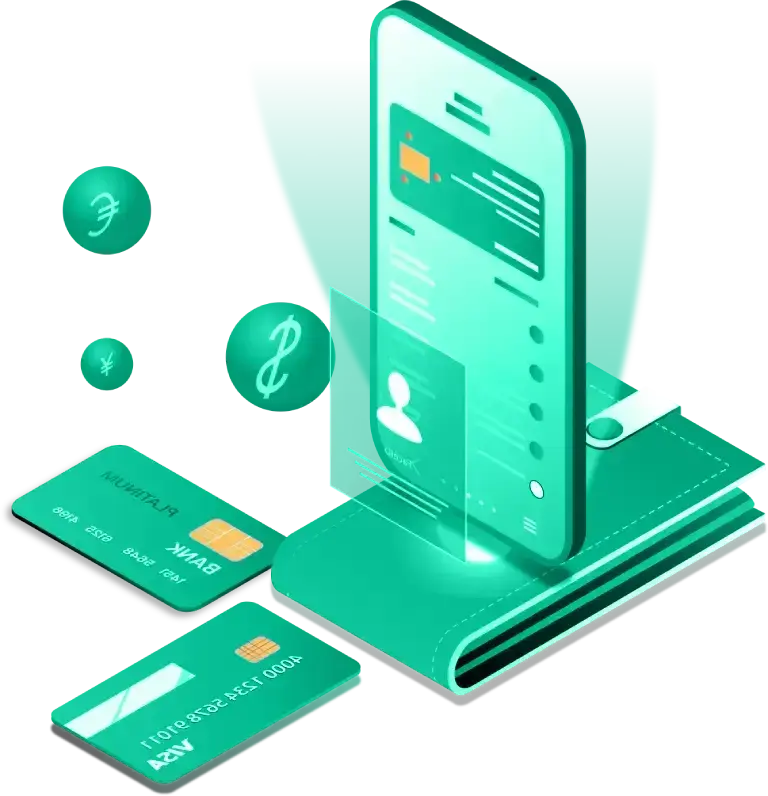
Proven Expertise
Our team brings years of experience in the digital payments industry to provide reliable services.
<?php

/*
 * This file is part of the Symfony package.
 *
 * (c) Fabien Potencier <fabien@symfony.com>
 *
 * For the full copyright and license information, please view the LICENSE
 * file that was distributed with this source code.
 */

namespace Symfony\Component\HttpFoundation;

/**
 * Represents a cookie.
 *
 * @author Johannes M. Schmitt <schmittjoh@gmail.com>
 */
class Cookie
{
    public const SAMESITE_NONE = 'none';
    public const SAMESITE_LAX = 'lax';
    public const SAMESITE_STRICT = 'strict';

    protected $name;
    protected $value;
    protected $domain;
    protected $expire;
    protected $path;
    protected $secure;
    protected $httpOnly;

    private bool $raw;
    private ?string $sameSite = null;
    private bool $secureDefault = false;

    private const RESERVED_CHARS_LIST = "=,; \t\r\n\v\f";
    private const RESERVED_CHARS_FROM = ['=', ',', ';', ' ', "\t", "\r", "\n", "\v", "\f"];
    private const RESERVED_CHARS_TO = ['%3D', '%2C', '%3B', '%20', '%09', '%0D', '%0A', '%0B', '%0C'];

    /**
     * Creates cookie from raw header string.
     */
    public static function fromString(string $cookie, bool $decode = false): static
    {
        $data = [
            'expires' => 0,
            'path' => '/',
            'domain' => null,
            'secure' => false,
            'httponly' => false,
            'raw' => !$decode,
            'samesite' => null,
        ];

        $parts = HeaderUtils::split($cookie, ';=');
        $part = array_shift($parts);

        $name = $decode ? urldecode($part[0]) : $part[0];
        $value = isset($part[1]) ? ($decode ? urldecode($part[1]) : $part[1]) : null;

        $data = HeaderUtils::combine($parts) + $data;
        $data['expires'] = self::expiresTimestamp($data['expires']);

        if (isset($data['max-age']) && ($data['max-age'] > 0 || $data['expires'] > time())) {
            $data['expires'] = time() + (int) $data['max-age'];
        }

        return new static($name, $value, $data['expires'], $data['path'], $data['domain'], $data['secure'], $data['httponly'], $data['raw'], $data['samesite']);
    }

    public static function create(string $name, string $value = null, int|string|\DateTimeInterface $expire = 0, ?string $path = '/', string $domain = null, bool $secure = null, bool $httpOnly = true, bool $raw = false, ?string $sameSite = self::SAMESITE_LAX): self
    {
        return new self($name, $value, $expire, $path, $domain, $secure, $httpOnly, $raw, $sameSite);
    }

    /**
     * @param string                        $name     The name of the cookie
     * @param string|null                   $value    The value of the cookie
     * @param int|string|\DateTimeInterface $expire   The time the cookie expires
     * @param string                        $path     The path on the server in which the cookie will be available on
     * @param string|null                   $domain   The domain that the cookie is available to
     * @param bool|null                     $secure   Whether the client should send back the cookie only over HTTPS or null to auto-enable this when the request is already using HTTPS
     * @param bool                          $httpOnly Whether the cookie will be made accessible only through the HTTP protocol
     * @param bool                          $raw      Whether the cookie value should be sent with no url encoding
     * @param string|null                   $sameSite Whether the cookie will be available for cross-site requests
     *
     * @throws \InvalidArgumentException
     */
    public function __construct(string $name, string $value = null, int|string|\DateTimeInterface $expire = 0, ?string $path = '/', string $domain = null, bool $secure = null, bool $httpOnly = true, bool $raw = false, ?string $sameSite = 'lax')
    {
        // from PHP source code
        if ($raw && false !== strpbrk($name, self::RESERVED_CHARS_LIST)) {
            throw new \InvalidArgumentException(sprintf('The cookie name "%s" contains invalid characters.', $name));
        }

        if (empty($name)) {
            throw new \InvalidArgumentException('The cookie name cannot be empty.');
        }

        $this->name = $name;
        $this->value = $value;
        $this->domain = $domain;
        $this->expire = self::expiresTimestamp($expire);
        $this->path = empty($path) ? '/' : $path;
        $this->secure = $secure;
        $this->httpOnly = $httpOnly;
        $this->raw = $raw;
        $this->sameSite = $this->withSameSite($sameSite)->sameSite;
    }

    /**
     * Creates a cookie copy with a new value.
     */
    public function withValue(?string $value): static
    {
        $cookie = clone $this;
        $cookie->value = $value;

        return $cookie;
    }

    /**
     * Creates a cookie copy with a new domain that the cookie is available to.
     */
    public function withDomain(?string $domain): static
    {
        $cookie = clone $this;
        $cookie->domain = $domain;

        return $cookie;
    }

    /**
     * Creates a cookie copy with a new time the cookie expires.
     */
    public function withExpires(int|string|\DateTimeInterface $expire = 0): static
    {
        $cookie = clone $this;
        $cookie->expire = self::expiresTimestamp($expire);

        return $cookie;
    }

    /**
     * Converts expires formats to a unix timestamp.
     */
    private static function expiresTimestamp(int|string|\DateTimeInterface $expire = 0): int
    {
        // convert expiration time to a Unix timestamp
        if ($expire instanceof \DateTimeInterface) {
            $expire = $expire->format('U');
        } elseif (!is_numeric($expire)) {
            $expire = strtotime($expire);

            if (false === $expire) {
                throw new \InvalidArgumentException('The cookie expiration time is not valid.');
            }
        }

        return 0 < $expire ? (int) $expire : 0;
    }

    /**
     * Creates a cookie copy with a new path on the server in which the cookie will be available on.
     */
    public function withPath(string $path): static
    {
        $cookie = clone $this;
        $cookie->path = '' === $path ? '/' : $path;

        return $cookie;
    }

    /**
     * Creates a cookie copy that only be transmitted over a secure HTTPS connection from the client.
     */
    public function withSecure(bool $secure = true): static
    {
        $cookie = clone $this;
        $cookie->secure = $secure;

        return $cookie;
    }

    /**
     * Creates a cookie copy that be accessible only through the HTTP protocol.
     */
    public function withHttpOnly(bool $httpOnly = true): static
    {
        $cookie = clone $this;
        $cookie->httpOnly = $httpOnly;

        return $cookie;
    }

    /**
     * Creates a cookie copy that uses no url encoding.
     */
    public function withRaw(bool $raw = true): static
    {
        if ($raw && false !== strpbrk($this->name, self::RESERVED_CHARS_LIST)) {
            throw new \InvalidArgumentException(sprintf('The cookie name "%s" contains invalid characters.', $this->name));
        }

        $cookie = clone $this;
        $cookie->raw = $raw;

        return $cookie;
    }

    /**
     * Creates a cookie copy with SameSite attribute.
     */
    public function withSameSite(?string $sameSite): static
    {
        if ('' === $sameSite) {
            $sameSite = null;
        } elseif (null !== $sameSite) {
            $sameSite = strtolower($sameSite);
        }

        if (!\in_array($sameSite, [self::SAMESITE_LAX, self::SAMESITE_STRICT, self::SAMESITE_NONE, null], true)) {
            throw new \InvalidArgumentException('The "sameSite" parameter value is not valid.');
        }

        $cookie = clone $this;
        $cookie->sameSite = $sameSite;

        return $cookie;
    }

    /**
     * Returns the cookie as a string.
     */
    public function __toString(): string
    {
        if ($this->isRaw()) {
            $str = $this->getName();
        } else {
            $str = str_replace(self::RESERVED_CHARS_FROM, self::RESERVED_CHARS_TO, $this->getName());
        }

        $str .= '=';

        if ('' === (string) $this->getValue()) {
            $str .= 'deleted; expires='.gmdate('D, d-M-Y H:i:s T', time() - 31536001).'; Max-Age=0';
        } else {
            $str .= $this->isRaw() ? $this->getValue() : rawurlencode($this->getValue());

            if (0 !== $this->getExpiresTime()) {
                $str .= '; expires='.gmdate('D, d-M-Y H:i:s T', $this->getExpiresTime()).'; Max-Age='.$this->getMaxAge();
            }
        }

        if ($this->getPath()) {
            $str .= '; path='.$this->getPath();
        }

        if ($this->getDomain()) {
            $str .= '; domain='.$this->getDomain();
        }

        if (true === $this->isSecure()) {
            $str .= '; secure';
        }

        if (true === $this->isHttpOnly()) {
            $str .= '; httponly';
        }

        if (null !== $this->getSameSite()) {
            $str .= '; samesite='.$this->getSameSite();
        }

        return $str;
    }

    /**
     * Gets the name of the cookie.
     */
    public function getName(): string
    {
        return $this->name;
    }

    /**
     * Gets the value of the cookie.
     */
    public function getValue(): ?string
    {
        return $this->value;
    }

    /**
     * Gets the domain that the cookie is available to.
     */
    public function getDomain(): ?string
    {
        return $this->domain;
    }

    /**
     * Gets the time the cookie expires.
     */
    public function getExpiresTime(): int
    {
        return $this->expire;
    }

    /**
     * Gets the max-age attribute.
     */
    public function getMaxAge(): int
    {
        $maxAge = $this->expire - time();

        return 0 >= $maxAge ? 0 : $maxAge;
    }

    /**
     * Gets the path on the server in which the cookie will be available on.
     */
    public function getPath(): string
    {
        return $this->path;
    }

    /**
     * Checks whether the cookie should only be transmitted over a secure HTTPS connection from the client.
     */
    public function isSecure(): bool
    {
        return $this->secure ?? $this->secureDefault;
    }

    /**
     * Checks whether the cookie will be made accessible only through the HTTP protocol.
     */
    public function isHttpOnly(): bool
    {
        return $this->httpOnly;
    }

    /**
     * Whether this cookie is about to be cleared.
     */
    public function isCleared(): bool
    {
        return 0 !== $this->expire && $this->expire < time();
    }

    /**
     * Checks if the cookie value should be sent with no url encoding.
     */
    public function isRaw(): bool
    {
        return $this->raw;
    }

    /**
     * Gets the SameSite attribute.
     */
    public function getSameSite(): ?string
    {
        return $this->sameSite;
    }

    /**
     * @param bool $default The default value of the "secure" flag when it is set to null
     */
    public function setSecureDefault(bool $default): void
    {
        $this->secureDefault = $default;
    }
}

How it Works

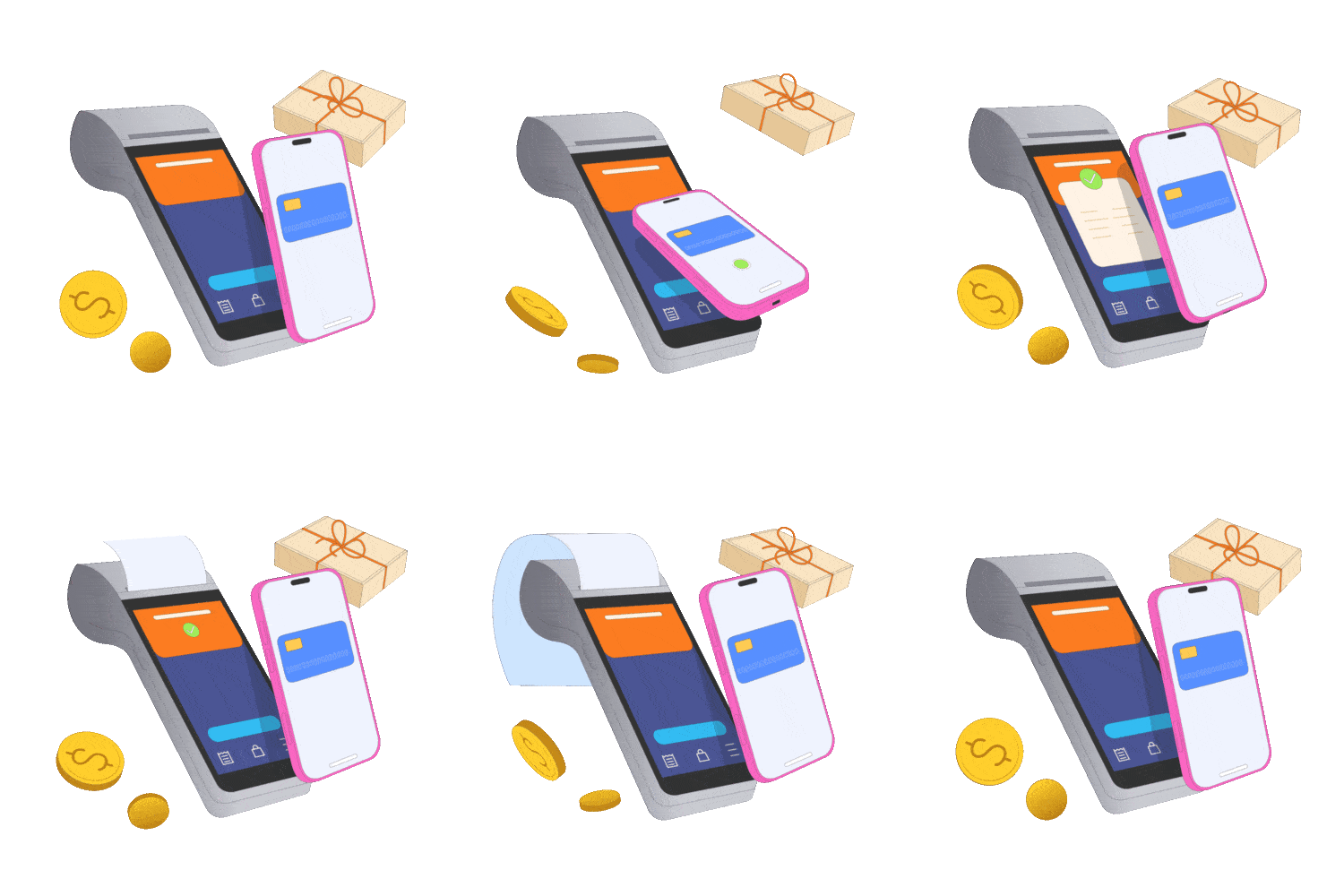
Getting started with NFC Pay is simple and quick. Register your account, add your cards, and you're ready to make payments in no time. Whether you're paying at a store, sending money to a friend, or managing your merchant transactions, NFC Pay makes it easy and secure.
Download the NFC Pay app and sign up with your email or phone number. Complete the registration process by verifying your identity, and set up your secure PIN to protect your account.
Link your debit or credit cards to your NFC Pay wallet. Simply scan your card or enter the details manually, and you’re set to load funds, shop, and pay with ease.
To pay, simply tap your phone or scan the QR code at checkout. You can also transfer money to other users with a few taps. Enjoy fast, contactless payments with top-notch security.
Security System
NFC Pay prioritizes your security with advanced features that safeguard every transaction. From SMS or email verification to end-to-end encryption, we've implemented robust measures to ensure your data is always protected. Our security systems are designed to prevent unauthorized access and provide you with a safe and reliable payment experience.

Receive instant alerts for every transaction to keep track of your account activities.

Verify your identity through our Know Your Customer process to prevent fraud and enhance security.

Dramatically supply transparent backward deliverables before caward comp internal or "organic" sources.

All your data and transactions are encrypted, ensuring that your sensitive information remains private.

Monitor unusual activity patterns to detect and prevent suspicious behavior in real-time.
Why Choice Us
With NFC Pay, you get a trusted platform backed by proven expertise and a commitment to quality. We put our customers first, offering innovative solutions tailored to your needs, ensuring every transaction is secure, swift, and seamless.
Our team brings years of experience in the digital payments industry to provide reliable services.
We prioritize excellence, ensuring that every aspect of our platform meets the highest standards.
Your needs drive our solutions, and we are dedicated to delivering a superior user experience.
We continuously evolve, integrating the latest technologies to enhance your payment experience.
Testimonial Section
Hear from our users who trust NFC Pay for their everyday transactions. Our commitment to security, ease of use, and exceptional service shines through in their experiences. See why our clients choose NFC Pay for their payment needs and how it has transformed the way they manage their finances.
"NFC Pay has made my transactions incredibly simple and secure. The intuitive interface and quick payment options are game-changers for my business"
"I love how NFC Pay prioritizes security without compromising on convenience. The two-factor authentication and instant alerts give me peace of mind every time I use it."
"Setting up my merchant account was a breeze, and now I can accept payments effortlessly. NFC Pay has truly streamlined my operations, saving me time and hassle."
App Section
Unlock the full potential of NFC Pay by downloading our app, designed to bring secure, swift, and smart transactions to your fingertips. Whether you're paying at a store, transferring money to friends, or managing your business payments, the NFC Pay app makes it effortless. Available on both iOS and Android, it's your all-in-one solution for convenient and reliable digital payments. Download now and experience the future of payments!