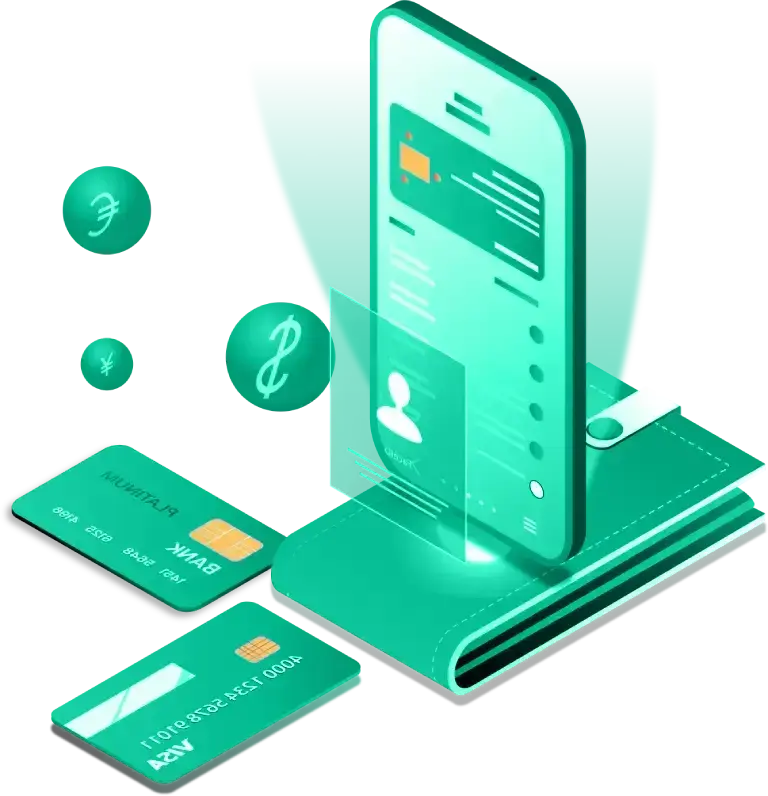
Proven Expertise
Our team brings years of experience in the digital payments industry to provide reliable services.
<?php
namespace Defuse\Crypto;
use Defuse\Crypto\Exception as Ex;
final class File
{
/**
* Encrypts the input file, saving the ciphertext to the output file.
*
* @param string $inputFilename
* @param string $outputFilename
* @param Key $key
* @return void
*
* @throws Ex\EnvironmentIsBrokenException
* @throws Ex\IOException
*/
public static function encryptFile($inputFilename, $outputFilename, Key $key)
{
self::encryptFileInternal(
$inputFilename,
$outputFilename,
KeyOrPassword::createFromKey($key)
);
}
/**
* Encrypts a file with a password, using a slow key derivation function to
* make password cracking more expensive.
*
* @param string $inputFilename
* @param string $outputFilename
* @param string $password
* @return void
*
* @throws Ex\EnvironmentIsBrokenException
* @throws Ex\IOException
*/
public static function encryptFileWithPassword(
$inputFilename,
$outputFilename,
#[\SensitiveParameter]
$password
)
{
self::encryptFileInternal(
$inputFilename,
$outputFilename,
KeyOrPassword::createFromPassword($password)
);
}
/**
* Decrypts the input file, saving the plaintext to the output file.
*
* @param string $inputFilename
* @param string $outputFilename
* @param Key $key
* @return void
*
* @throws Ex\EnvironmentIsBrokenException
* @throws Ex\IOException
* @throws Ex\WrongKeyOrModifiedCiphertextException
*/
public static function decryptFile($inputFilename, $outputFilename, Key $key)
{
self::decryptFileInternal(
$inputFilename,
$outputFilename,
KeyOrPassword::createFromKey($key)
);
}
/**
* Decrypts a file with a password, using a slow key derivation function to
* make password cracking more expensive.
*
* @param string $inputFilename
* @param string $outputFilename
* @param string $password
* @return void
*
* @throws Ex\EnvironmentIsBrokenException
* @throws Ex\IOException
* @throws Ex\WrongKeyOrModifiedCiphertextException
*/
public static function decryptFileWithPassword(
$inputFilename,
$outputFilename,
#[\SensitiveParameter]
$password
)
{
self::decryptFileInternal(
$inputFilename,
$outputFilename,
KeyOrPassword::createFromPassword($password)
);
}
/**
* Takes two resource handles and encrypts the contents of the first,
* writing the ciphertext into the second.
*
* @param resource $inputHandle
* @param resource $outputHandle
* @param Key $key
* @return void
*
* @throws Ex\EnvironmentIsBrokenException
* @throws Ex\WrongKeyOrModifiedCiphertextException
*/
public static function encryptResource($inputHandle, $outputHandle, Key $key)
{
self::encryptResourceInternal(
$inputHandle,
$outputHandle,
KeyOrPassword::createFromKey($key)
);
}
/**
* Encrypts the contents of one resource handle into another with a
* password, using a slow key derivation function to make password cracking
* more expensive.
*
* @param resource $inputHandle
* @param resource $outputHandle
* @param string $password
* @return void
*
* @throws Ex\EnvironmentIsBrokenException
* @throws Ex\IOException
* @throws Ex\WrongKeyOrModifiedCiphertextException
*/
public static function encryptResourceWithPassword(
$inputHandle,
$outputHandle,
#[\SensitiveParameter]
$password
)
{
self::encryptResourceInternal(
$inputHandle,
$outputHandle,
KeyOrPassword::createFromPassword($password)
);
}
/**
* Takes two resource handles and decrypts the contents of the first,
* writing the plaintext into the second.
*
* @param resource $inputHandle
* @param resource $outputHandle
* @param Key $key
* @return void
*
* @throws Ex\EnvironmentIsBrokenException
* @throws Ex\IOException
* @throws Ex\WrongKeyOrModifiedCiphertextException
*/
public static function decryptResource($inputHandle, $outputHandle, Key $key)
{
self::decryptResourceInternal(
$inputHandle,
$outputHandle,
KeyOrPassword::createFromKey($key)
);
}
/**
* Decrypts the contents of one resource into another with a password, using
* a slow key derivation function to make password cracking more expensive.
*
* @param resource $inputHandle
* @param resource $outputHandle
* @param string $password
* @return void
*
* @throws Ex\EnvironmentIsBrokenException
* @throws Ex\IOException
* @throws Ex\WrongKeyOrModifiedCiphertextException
*/
public static function decryptResourceWithPassword(
$inputHandle,
$outputHandle,
#[\SensitiveParameter]
$password
)
{
self::decryptResourceInternal(
$inputHandle,
$outputHandle,
KeyOrPassword::createFromPassword($password)
);
}
/**
* Encrypts a file with either a key or a password.
*
* @param string $inputFilename
* @param string $outputFilename
* @param KeyOrPassword $secret
* @return void
*
* @throws Ex\CryptoException
* @throws Ex\IOException
*/
private static function encryptFileInternal($inputFilename, $outputFilename, KeyOrPassword $secret)
{
if (file_exists($inputFilename) && file_exists($outputFilename) && realpath($inputFilename) === realpath($outputFilename)) {
throw new Ex\IOException('Input and output filenames must be different.');
}
/* Open the input file. */
self::removePHPUnitErrorHandler();
$if = @\fopen($inputFilename, 'rb');
self::restorePHPUnitErrorHandler();
if ($if === false) {
throw new Ex\IOException(
'Cannot open input file for encrypting: ' .
self::getLastErrorMessage()
);
}
if (\is_callable('\\stream_set_read_buffer')) {
/* This call can fail, but the only consequence is performance. */
\stream_set_read_buffer($if, 0);
}
/* Open the output file. */
self::removePHPUnitErrorHandler();
$of = @\fopen($outputFilename, 'wb');
self::restorePHPUnitErrorHandler();
if ($of === false) {
\fclose($if);
throw new Ex\IOException(
'Cannot open output file for encrypting: ' .
self::getLastErrorMessage()
);
}
if (\is_callable('\\stream_set_write_buffer')) {
/* This call can fail, but the only consequence is performance. */
\stream_set_write_buffer($of, 0);
}
/* Perform the encryption. */
try {
self::encryptResourceInternal($if, $of, $secret);
} catch (Ex\CryptoException $ex) {
\fclose($if);
\fclose($of);
throw $ex;
}
/* Close the input file. */
if (\fclose($if) === false) {
\fclose($of);
throw new Ex\IOException(
'Cannot close input file after encrypting'
);
}
/* Close the output file. */
if (\fclose($of) === false) {
throw new Ex\IOException(
'Cannot close output file after encrypting'
);
}
}
/**
* Decrypts a file with either a key or a password.
*
* @param string $inputFilename
* @param string $outputFilename
* @param KeyOrPassword $secret
* @return void
*
* @throws Ex\CryptoException
* @throws Ex\IOException
*/
private static function decryptFileInternal($inputFilename, $outputFilename, KeyOrPassword $secret)
{
if (file_exists($inputFilename) && file_exists($outputFilename) && realpath($inputFilename) === realpath($outputFilename)) {
throw new Ex\IOException('Input and output filenames must be different.');
}
/* Open the input file. */
self::removePHPUnitErrorHandler();
$if = @\fopen($inputFilename, 'rb');
self::restorePHPUnitErrorHandler();
if ($if === false) {
throw new Ex\IOException(
'Cannot open input file for decrypting: ' .
self::getLastErrorMessage()
);
}
if (\is_callable('\\stream_set_read_buffer')) {
/* This call can fail, but the only consequence is performance. */
\stream_set_read_buffer($if, 0);
}
/* Open the output file. */
self::removePHPUnitErrorHandler();
$of = @\fopen($outputFilename, 'wb');
self::restorePHPUnitErrorHandler();
if ($of === false) {
\fclose($if);
throw new Ex\IOException(
'Cannot open output file for decrypting: ' .
self::getLastErrorMessage()
);
}
if (\is_callable('\\stream_set_write_buffer')) {
/* This call can fail, but the only consequence is performance. */
\stream_set_write_buffer($of, 0);
}
/* Perform the decryption. */
try {
self::decryptResourceInternal($if, $of, $secret);
} catch (Ex\CryptoException $ex) {
\fclose($if);
\fclose($of);
throw $ex;
}
/* Close the input file. */
if (\fclose($if) === false) {
\fclose($of);
throw new Ex\IOException(
'Cannot close input file after decrypting'
);
}
/* Close the output file. */
if (\fclose($of) === false) {
throw new Ex\IOException(
'Cannot close output file after decrypting'
);
}
}
/**
* Encrypts a resource with either a key or a password.
*
* @param resource $inputHandle
* @param resource $outputHandle
* @param KeyOrPassword $secret
* @return void
*
* @throws Ex\EnvironmentIsBrokenException
* @throws Ex\IOException
* @psalm-suppress PossiblyInvalidArgument
* Fixes erroneous errors caused by PHP 7.2 switching the return value
* of hash_init from a resource to a HashContext.
*/
private static function encryptResourceInternal($inputHandle, $outputHandle, KeyOrPassword $secret)
{
if (! \is_resource($inputHandle)) {
throw new Ex\IOException(
'Input handle must be a resource!'
);
}
if (! \is_resource($outputHandle)) {
throw new Ex\IOException(
'Output handle must be a resource!'
);
}
$inputStat = \fstat($inputHandle);
$inputSize = $inputStat['size'];
$file_salt = Core::secureRandom(Core::SALT_BYTE_SIZE);
$keys = $secret->deriveKeys($file_salt);
$ekey = $keys->getEncryptionKey();
$akey = $keys->getAuthenticationKey();
$ivsize = Core::BLOCK_BYTE_SIZE;
$iv = Core::secureRandom($ivsize);
/* Initialize a streaming HMAC state. */
/** @var mixed $hmac */
$hmac = \hash_init(Core::HASH_FUNCTION_NAME, HASH_HMAC, $akey);
Core::ensureTrue(
\is_resource($hmac) || \is_object($hmac),
'Cannot initialize a hash context'
);
/* Write the header, salt, and IV. */
self::writeBytes(
$outputHandle,
Core::CURRENT_VERSION . $file_salt . $iv,
Core::HEADER_VERSION_SIZE + Core::SALT_BYTE_SIZE + $ivsize
);
/* Add the header, salt, and IV to the HMAC. */
\hash_update($hmac, Core::CURRENT_VERSION);
\hash_update($hmac, $file_salt);
\hash_update($hmac, $iv);
/* $thisIv will be incremented after each call to the encryption. */
$thisIv = $iv;
/* How many blocks do we encrypt at a time? We increment by this value. */
/**
* @psalm-suppress RedundantCast
*/
$inc = (int) (Core::BUFFER_BYTE_SIZE / Core::BLOCK_BYTE_SIZE);
/* Loop until we reach the end of the input file. */
$at_file_end = false;
while (! (\feof($inputHandle) || $at_file_end)) {
/* Find out if we can read a full buffer, or only a partial one. */
/** @var int */
$pos = \ftell($inputHandle);
if (!\is_int($pos)) {
throw new Ex\IOException(
'Could not get current position in input file during encryption'
);
}
if ($pos + Core::BUFFER_BYTE_SIZE >= $inputSize) {
/* We're at the end of the file, so we need to break out of the loop. */
$at_file_end = true;
$read = self::readBytes(
$inputHandle,
$inputSize - $pos
);
} else {
$read = self::readBytes(
$inputHandle,
Core::BUFFER_BYTE_SIZE
);
}
/* Encrypt this buffer. */
/** @var string */
$encrypted = \openssl_encrypt(
$read,
Core::CIPHER_METHOD,
$ekey,
OPENSSL_RAW_DATA,
$thisIv
);
Core::ensureTrue(\is_string($encrypted), 'OpenSSL encryption error');
/* Write this buffer's ciphertext. */
self::writeBytes($outputHandle, $encrypted, Core::ourStrlen($encrypted));
/* Add this buffer's ciphertext to the HMAC. */
\hash_update($hmac, $encrypted);
/* Increment the counter by the number of blocks in a buffer. */
$thisIv = Core::incrementCounter($thisIv, $inc);
/* WARNING: Usually, unless the file is a multiple of the buffer
* size, $thisIv will contain an incorrect value here on the last
* iteration of this loop. */
}
/* Get the HMAC and append it to the ciphertext. */
$final_mac = \hash_final($hmac, true);
self::writeBytes($outputHandle, $final_mac, Core::MAC_BYTE_SIZE);
}
/**
* Decrypts a file-backed resource with either a key or a password.
*
* @param resource $inputHandle
* @param resource $outputHandle
* @param KeyOrPassword $secret
* @return void
*
* @throws Ex\EnvironmentIsBrokenException
* @throws Ex\IOException
* @throws Ex\WrongKeyOrModifiedCiphertextException
* @psalm-suppress PossiblyInvalidArgument
* Fixes erroneous errors caused by PHP 7.2 switching the return value
* of hash_init from a resource to a HashContext.
*/
public static function decryptResourceInternal($inputHandle, $outputHandle, KeyOrPassword $secret)
{
if (! \is_resource($inputHandle)) {
throw new Ex\IOException(
'Input handle must be a resource!'
);
}
if (! \is_resource($outputHandle)) {
throw new Ex\IOException(
'Output handle must be a resource!'
);
}
/* Make sure the file is big enough for all the reads we need to do. */
$stat = \fstat($inputHandle);
if ($stat['size'] < Core::MINIMUM_CIPHERTEXT_SIZE) {
throw new Ex\WrongKeyOrModifiedCiphertextException(
'Input file is too small to have been created by this library.'
);
}
/* Check the version header. */
$header = self::readBytes($inputHandle, Core::HEADER_VERSION_SIZE);
if ($header !== Core::CURRENT_VERSION) {
throw new Ex\WrongKeyOrModifiedCiphertextException(
'Bad version header.'
);
}
/* Get the salt. */
$file_salt = self::readBytes($inputHandle, Core::SALT_BYTE_SIZE);
/* Get the IV. */
$ivsize = Core::BLOCK_BYTE_SIZE;
$iv = self::readBytes($inputHandle, $ivsize);
/* Derive the authentication and encryption keys. */
$keys = $secret->deriveKeys($file_salt);
$ekey = $keys->getEncryptionKey();
$akey = $keys->getAuthenticationKey();
/* We'll store the MAC of each buffer-sized chunk as we verify the
* actual MAC, so that we can check them again when decrypting. */
$macs = [];
/* $thisIv will be incremented after each call to the decryption. */
$thisIv = $iv;
/* How many blocks do we encrypt at a time? We increment by this value. */
/**
* @psalm-suppress RedundantCast
*/
$inc = (int) (Core::BUFFER_BYTE_SIZE / Core::BLOCK_BYTE_SIZE);
/* Get the HMAC. */
if (\fseek($inputHandle, (-1 * Core::MAC_BYTE_SIZE), SEEK_END) === -1) {
throw new Ex\IOException(
'Cannot seek to beginning of MAC within input file'
);
}
/* Get the position of the last byte in the actual ciphertext. */
/** @var int $cipher_end */
$cipher_end = \ftell($inputHandle);
if (!\is_int($cipher_end)) {
throw new Ex\IOException(
'Cannot read input file'
);
}
/* We have the position of the first byte of the HMAC. Go back by one. */
--$cipher_end;
/* Read the HMAC. */
/** @var string $stored_mac */
$stored_mac = self::readBytes($inputHandle, Core::MAC_BYTE_SIZE);
/* Initialize a streaming HMAC state. */
/** @var mixed $hmac */
$hmac = \hash_init(Core::HASH_FUNCTION_NAME, HASH_HMAC, $akey);
Core::ensureTrue(\is_resource($hmac) || \is_object($hmac), 'Cannot initialize a hash context');
/* Reset file pointer to the beginning of the file after the header */
if (\fseek($inputHandle, Core::HEADER_VERSION_SIZE, SEEK_SET) === -1) {
throw new Ex\IOException(
'Cannot read seek within input file'
);
}
/* Seek to the start of the actual ciphertext. */
if (\fseek($inputHandle, Core::SALT_BYTE_SIZE + $ivsize, SEEK_CUR) === -1) {
throw new Ex\IOException(
'Cannot seek input file to beginning of ciphertext'
);
}
/* PASS #1: Calculating the HMAC. */
\hash_update($hmac, $header);
\hash_update($hmac, $file_salt);
\hash_update($hmac, $iv);
/** @var mixed $hmac2 */
$hmac2 = \hash_copy($hmac);
$break = false;
while (! $break) {
/** @var int $pos */
$pos = \ftell($inputHandle);
if (!\is_int($pos)) {
throw new Ex\IOException(
'Could not get current position in input file during decryption'
);
}
/* Read the next buffer-sized chunk (or less). */
if ($pos + Core::BUFFER_BYTE_SIZE >= $cipher_end) {
$break = true;
$read = self::readBytes(
$inputHandle,
$cipher_end - $pos + 1
);
} else {
$read = self::readBytes(
$inputHandle,
Core::BUFFER_BYTE_SIZE
);
}
/* Update the HMAC. */
\hash_update($hmac, $read);
/* Remember this buffer-sized chunk's HMAC. */
/** @var mixed $chunk_mac */
$chunk_mac = \hash_copy($hmac);
Core::ensureTrue(\is_resource($chunk_mac) || \is_object($chunk_mac), 'Cannot duplicate a hash context');
$macs []= \hash_final($chunk_mac);
}
/* Get the final HMAC, which should match the stored one. */
/** @var string $final_mac */
$final_mac = \hash_final($hmac, true);
/* Verify the HMAC. */
if (! Core::hashEquals($final_mac, $stored_mac)) {
throw new Ex\WrongKeyOrModifiedCiphertextException(
'Integrity check failed.'
);
}
/* PASS #2: Decrypt and write output. */
/* Rewind to the start of the actual ciphertext. */
if (\fseek($inputHandle, Core::SALT_BYTE_SIZE + $ivsize + Core::HEADER_VERSION_SIZE, SEEK_SET) === -1) {
throw new Ex\IOException(
'Could not move the input file pointer during decryption'
);
}
$at_file_end = false;
while (! $at_file_end) {
/** @var int $pos */
$pos = \ftell($inputHandle);
if (!\is_int($pos)) {
throw new Ex\IOException(
'Could not get current position in input file during decryption'
);
}
/* Read the next buffer-sized chunk (or less). */
if ($pos + Core::BUFFER_BYTE_SIZE >= $cipher_end) {
$at_file_end = true;
$read = self::readBytes(
$inputHandle,
$cipher_end - $pos + 1
);
} else {
$read = self::readBytes(
$inputHandle,
Core::BUFFER_BYTE_SIZE
);
}
/* Recalculate the MAC (so far) and compare it with the one we
* remembered from pass #1 to ensure attackers didn't change the
* ciphertext after MAC verification. */
\hash_update($hmac2, $read);
/** @var mixed $calc_mac */
$calc_mac = \hash_copy($hmac2);
Core::ensureTrue(\is_resource($calc_mac) || \is_object($calc_mac), 'Cannot duplicate a hash context');
$calc = \hash_final($calc_mac);
if (empty($macs)) {
throw new Ex\WrongKeyOrModifiedCiphertextException(
'File was modified after MAC verification'
);
} elseif (! Core::hashEquals(\array_shift($macs), $calc)) {
throw new Ex\WrongKeyOrModifiedCiphertextException(
'File was modified after MAC verification'
);
}
/* Decrypt this buffer-sized chunk. */
/** @var string $decrypted */
$decrypted = \openssl_decrypt(
$read,
Core::CIPHER_METHOD,
$ekey,
OPENSSL_RAW_DATA,
$thisIv
);
Core::ensureTrue(\is_string($decrypted), 'OpenSSL decryption error');
/* Write the plaintext to the output file. */
self::writeBytes(
$outputHandle,
$decrypted,
Core::ourStrlen($decrypted)
);
/* Increment the IV by the amount of blocks in a buffer. */
/** @var string $thisIv */
$thisIv = Core::incrementCounter($thisIv, $inc);
/* WARNING: Usually, unless the file is a multiple of the buffer
* size, $thisIv will contain an incorrect value here on the last
* iteration of this loop. */
}
}
/**
* Read from a stream; prevent partial reads.
*
* @param resource $stream
* @param int $num_bytes
* @return string
*
* @throws Ex\IOException
* @throws Ex\EnvironmentIsBrokenException
*/
public static function readBytes($stream, $num_bytes)
{
Core::ensureTrue($num_bytes >= 0, 'Tried to read less than 0 bytes');
if ($num_bytes === 0) {
return '';
}
$buf = '';
$remaining = $num_bytes;
while ($remaining > 0 && ! \feof($stream)) {
/** @var string $read */
$read = \fread($stream, $remaining);
if (!\is_string($read)) {
throw new Ex\IOException(
'Could not read from the file'
);
}
$buf .= $read;
$remaining -= Core::ourStrlen($read);
}
if (Core::ourStrlen($buf) !== $num_bytes) {
throw new Ex\IOException(
'Tried to read past the end of the file'
);
}
return $buf;
}
/**
* Write to a stream; prevents partial writes.
*
* @param resource $stream
* @param string $buf
* @param int $num_bytes
* @return int
*
* @throws Ex\IOException
*/
public static function writeBytes($stream, $buf, $num_bytes = null)
{
$bufSize = Core::ourStrlen($buf);
if ($num_bytes === null) {
$num_bytes = $bufSize;
}
if ($num_bytes > $bufSize) {
throw new Ex\IOException(
'Trying to write more bytes than the buffer contains.'
);
}
if ($num_bytes < 0) {
throw new Ex\IOException(
'Tried to write less than 0 bytes'
);
}
$remaining = $num_bytes;
while ($remaining > 0) {
/** @var int $written */
$written = \fwrite($stream, $buf, $remaining);
if (!\is_int($written)) {
throw new Ex\IOException(
'Could not write to the file'
);
}
$buf = (string) Core::ourSubstr($buf, $written, null);
$remaining -= $written;
}
return $num_bytes;
}
/**
* Returns the last PHP error's or warning's message string.
*
* @return string
*/
private static function getLastErrorMessage()
{
$error = error_get_last();
if ($error === null) {
return '[no PHP error, or you have a custom error handler set]';
} else {
return $error['message'];
}
}
/**
* PHPUnit sets an error handler, which prevents getLastErrorMessage() from working,
* because error_get_last does not work when custom handlers are set.
*
* This is a workaround, which should be a no-op in production deployments, to make
* getLastErrorMessage() return the error messages that the PHPUnit tests expect.
*
* If, in a production deployment, a custom error handler is set, the exception
* handling will still work as usual, but the error messages will be confusing.
*
* @return void
*/
private static function removePHPUnitErrorHandler() {
if (defined('PHPUNIT_COMPOSER_INSTALL') || defined('__PHPUNIT_PHAR__')) {
set_error_handler(null);
}
}
/**
* Undoes what removePHPUnitErrorHandler did.
*
* @return void
*/
private static function restorePHPUnitErrorHandler() {
if (defined('PHPUNIT_COMPOSER_INSTALL') || defined('__PHPUNIT_PHAR__')) {
restore_error_handler();
}
}
}

How it Works

Getting started with NFC Pay is simple and quick. Register your account, add your cards, and you're ready to make payments in no time. Whether you're paying at a store, sending money to a friend, or managing your merchant transactions, NFC Pay makes it easy and secure.
Download the NFC Pay app and sign up with your email or phone number. Complete the registration process by verifying your identity, and set up your secure PIN to protect your account.
Link your debit or credit cards to your NFC Pay wallet. Simply scan your card or enter the details manually, and you’re set to load funds, shop, and pay with ease.
To pay, simply tap your phone or scan the QR code at checkout. You can also transfer money to other users with a few taps. Enjoy fast, contactless payments with top-notch security.

Security System
NFC Pay prioritizes your security with advanced features that safeguard every transaction. From SMS or email verification to end-to-end encryption, we've implemented robust measures to ensure your data is always protected. Our security systems are designed to prevent unauthorized access and provide you with a safe and reliable payment experience.

Receive instant alerts for every transaction to keep track of your account activities.

Verify your identity through our Know Your Customer process to prevent fraud and enhance security.

Dramatically supply transparent backward deliverables before caward comp internal or "organic" sources.

All your data and transactions are encrypted, ensuring that your sensitive information remains private.

Monitor unusual activity patterns to detect and prevent suspicious behavior in real-time.
Why Choice Us
With NFC Pay, you get a trusted platform backed by proven expertise and a commitment to quality. We put our customers first, offering innovative solutions tailored to your needs, ensuring every transaction is secure, swift, and seamless.
Our team brings years of experience in the digital payments industry to provide reliable services.
We prioritize excellence, ensuring that every aspect of our platform meets the highest standards.
Your needs drive our solutions, and we are dedicated to delivering a superior user experience.
We continuously evolve, integrating the latest technologies to enhance your payment experience.
Testimonial Section
Hear from our users who trust NFC Pay for their everyday transactions. Our commitment to security, ease of use, and exceptional service shines through in their experiences. See why our clients choose NFC Pay for their payment needs and how it has transformed the way they manage their finances.
"NFC Pay has made my transactions incredibly simple and secure. The intuitive interface and quick payment options are game-changers for my business"
"I love how NFC Pay prioritizes security without compromising on convenience. The two-factor authentication and instant alerts give me peace of mind every time I use it."
"Setting up my merchant account was a breeze, and now I can accept payments effortlessly. NFC Pay has truly streamlined my operations, saving me time and hassle."
App Section
Unlock the full potential of NFC Pay by downloading our app, designed to bring secure, swift, and smart transactions to your fingertips. Whether you're paying at a store, transferring money to friends, or managing your business payments, the NFC Pay app makes it effortless. Available on both iOS and Android, it's your all-in-one solution for convenient and reliable digital payments. Download now and experience the future of payments!