<?php

namespace Firebase\JWT;

use DomainException;
use InvalidArgumentException;
use UnexpectedValueException;

/**
 * JSON Web Key implementation, based on this spec:
 * https://tools.ietf.org/html/draft-ietf-jose-json-web-key-41
 *
 * PHP version 5
 *
 * @category Authentication
 * @package  Authentication_JWT
 * @author   Bui Sy Nguyen <nguyenbs@gmail.com>
 * @license  http://opensource.org/licenses/BSD-3-Clause 3-clause BSD
 * @link     https://github.com/firebase/php-jwt
 */
class JWK
{
    private const OID = '1.2.840.10045.2.1';
    private const ASN1_OBJECT_IDENTIFIER = 0x06;
    private const ASN1_SEQUENCE = 0x10; // also defined in JWT
    private const ASN1_BIT_STRING = 0x03;
    private const EC_CURVES = [
        'P-256' => '1.2.840.10045.3.1.7', // Len: 64
        'secp256k1' => '1.3.132.0.10', // Len: 64
        'P-384' => '1.3.132.0.34', // Len: 96
        // 'P-521' => '1.3.132.0.35', // Len: 132 (not supported)
    ];

    // For keys with "kty" equal to "OKP" (Octet Key Pair), the "crv" parameter must contain the key subtype.
    // This library supports the following subtypes:
    private const OKP_SUBTYPES = [
        'Ed25519' => true, // RFC 8037
    ];

    /**
     * Parse a set of JWK keys
     *
     * @param array<mixed> $jwks The JSON Web Key Set as an associative array
     * @param string       $defaultAlg The algorithm for the Key object if "alg" is not set in the
     *                                 JSON Web Key Set
     *
     * @return array<string, Key> An associative array of key IDs (kid) to Key objects
     *
     * @throws InvalidArgumentException     Provided JWK Set is empty
     * @throws UnexpectedValueException     Provided JWK Set was invalid
     * @throws DomainException              OpenSSL failure
     *
     * @uses parseKey
     */
    public static function parseKeySet(array $jwks, string $defaultAlg = null): array
    {
        $keys = [];

        if (!isset($jwks['keys'])) {
            throw new UnexpectedValueException('"keys" member must exist in the JWK Set');
        }

        if (empty($jwks['keys'])) {
            throw new InvalidArgumentException('JWK Set did not contain any keys');
        }

        foreach ($jwks['keys'] as $k => $v) {
            $kid = isset($v['kid']) ? $v['kid'] : $k;
            if ($key = self::parseKey($v, $defaultAlg)) {
                $keys[(string) $kid] = $key;
            }
        }

        if (0 === \count($keys)) {
            throw new UnexpectedValueException('No supported algorithms found in JWK Set');
        }

        return $keys;
    }

    /**
     * Parse a JWK key
     *
     * @param array<mixed> $jwk An individual JWK
     * @param string       $defaultAlg The algorithm for the Key object if "alg" is not set in the
     *                                 JSON Web Key Set
     *
     * @return Key The key object for the JWK
     *
     * @throws InvalidArgumentException     Provided JWK is empty
     * @throws UnexpectedValueException     Provided JWK was invalid
     * @throws DomainException              OpenSSL failure
     *
     * @uses createPemFromModulusAndExponent
     */
    public static function parseKey(array $jwk, string $defaultAlg = null): ?Key
    {
        if (empty($jwk)) {
            throw new InvalidArgumentException('JWK must not be empty');
        }

        if (!isset($jwk['kty'])) {
            throw new UnexpectedValueException('JWK must contain a "kty" parameter');
        }

        if (!isset($jwk['alg'])) {
            if (\is_null($defaultAlg)) {
                // The "alg" parameter is optional in a KTY, but an algorithm is required
                // for parsing in this library. Use the $defaultAlg parameter when parsing the
                // key set in order to prevent this error.
                // @see https://datatracker.ietf.org/doc/html/rfc7517#section-4.4
                throw new UnexpectedValueException('JWK must contain an "alg" parameter');
            }
            $jwk['alg'] = $defaultAlg;
        }

        switch ($jwk['kty']) {
            case 'RSA':
                if (!empty($jwk['d'])) {
                    throw new UnexpectedValueException('RSA private keys are not supported');
                }
                if (!isset($jwk['n']) || !isset($jwk['e'])) {
                    throw new UnexpectedValueException('RSA keys must contain values for both "n" and "e"');
                }

                $pem = self::createPemFromModulusAndExponent($jwk['n'], $jwk['e']);
                $publicKey = \openssl_pkey_get_public($pem);
                if (false === $publicKey) {
                    throw new DomainException(
                        'OpenSSL error: ' . \openssl_error_string()
                    );
                }
                return new Key($publicKey, $jwk['alg']);
            case 'EC':
                if (isset($jwk['d'])) {
                    // The key is actually a private key
                    throw new UnexpectedValueException('Key data must be for a public key');
                }

                if (empty($jwk['crv'])) {
                    throw new UnexpectedValueException('crv not set');
                }

                if (!isset(self::EC_CURVES[$jwk['crv']])) {
                    throw new DomainException('Unrecognised or unsupported EC curve');
                }

                if (empty($jwk['x']) || empty($jwk['y'])) {
                    throw new UnexpectedValueException('x and y not set');
                }

                $publicKey = self::createPemFromCrvAndXYCoordinates($jwk['crv'], $jwk['x'], $jwk['y']);
                return new Key($publicKey, $jwk['alg']);
            case 'OKP':
                if (isset($jwk['d'])) {
                    // The key is actually a private key
                    throw new UnexpectedValueException('Key data must be for a public key');
                }

                if (!isset($jwk['crv'])) {
                    throw new UnexpectedValueException('crv not set');
                }

                if (empty(self::OKP_SUBTYPES[$jwk['crv']])) {
                    throw new DomainException('Unrecognised or unsupported OKP key subtype');
                }

                if (empty($jwk['x'])) {
                    throw new UnexpectedValueException('x not set');
                }

                // This library works internally with EdDSA keys (Ed25519) encoded in standard base64.
                $publicKey = JWT::convertBase64urlToBase64($jwk['x']);
                return new Key($publicKey, $jwk['alg']);
            default:
                break;
        }

        return null;
    }

    /**
     * Converts the EC JWK values to pem format.
     *
     * @param   string  $crv The EC curve (only P-256 & P-384 is supported)
     * @param   string  $x   The EC x-coordinate
     * @param   string  $y   The EC y-coordinate
     *
     * @return  string
     */
    private static function createPemFromCrvAndXYCoordinates(string $crv, string $x, string $y): string
    {
        $pem =
            self::encodeDER(
                self::ASN1_SEQUENCE,
                self::encodeDER(
                    self::ASN1_SEQUENCE,
                    self::encodeDER(
                        self::ASN1_OBJECT_IDENTIFIER,
                        self::encodeOID(self::OID)
                    )
                    . self::encodeDER(
                        self::ASN1_OBJECT_IDENTIFIER,
                        self::encodeOID(self::EC_CURVES[$crv])
                    )
                ) .
                self::encodeDER(
                    self::ASN1_BIT_STRING,
                    \chr(0x00) . \chr(0x04)
                    . JWT::urlsafeB64Decode($x)
                    . JWT::urlsafeB64Decode($y)
                )
            );

        return sprintf(
            "-----BEGIN PUBLIC KEY-----\n%s\n-----END PUBLIC KEY-----\n",
            wordwrap(base64_encode($pem), 64, "\n", true)
        );
    }

    /**
     * Create a public key represented in PEM format from RSA modulus and exponent information
     *
     * @param string $n The RSA modulus encoded in Base64
     * @param string $e The RSA exponent encoded in Base64
     *
     * @return string The RSA public key represented in PEM format
     *
     * @uses encodeLength
     */
    private static function createPemFromModulusAndExponent(
        string $n,
        string $e
    ): string {
        $mod = JWT::urlsafeB64Decode($n);
        $exp = JWT::urlsafeB64Decode($e);

        $modulus = \pack('Ca*a*', 2, self::encodeLength(\strlen($mod)), $mod);
        $publicExponent = \pack('Ca*a*', 2, self::encodeLength(\strlen($exp)), $exp);

        $rsaPublicKey = \pack(
            'Ca*a*a*',
            48,
            self::encodeLength(\strlen($modulus) + \strlen($publicExponent)),
            $modulus,
            $publicExponent
        );

        // sequence(oid(1.2.840.113549.1.1.1), null)) = rsaEncryption.
        $rsaOID = \pack('H*', '300d06092a864886f70d0101010500'); // hex version of MA0GCSqGSIb3DQEBAQUA
        $rsaPublicKey = \chr(0) . $rsaPublicKey;
        $rsaPublicKey = \chr(3) . self::encodeLength(\strlen($rsaPublicKey)) . $rsaPublicKey;

        $rsaPublicKey = \pack(
            'Ca*a*',
            48,
            self::encodeLength(\strlen($rsaOID . $rsaPublicKey)),
            $rsaOID . $rsaPublicKey
        );

        return "-----BEGIN PUBLIC KEY-----\r\n" .
            \chunk_split(\base64_encode($rsaPublicKey), 64) .
            '-----END PUBLIC KEY-----';
    }

    /**
     * DER-encode the length
     *
     * DER supports lengths up to (2**8)**127, however, we'll only support lengths up to (2**8)**4.  See
     * {@link http://itu.int/ITU-T/studygroups/com17/languages/X.690-0207.pdf#p=13 X.690 paragraph 8.1.3} for more information.
     *
     * @param int $length
     * @return string
     */
    private static function encodeLength(int $length): string
    {
        if ($length <= 0x7F) {
            return \chr($length);
        }

        $temp = \ltrim(\pack('N', $length), \chr(0));

        return \pack('Ca*', 0x80 | \strlen($temp), $temp);
    }

    /**
     * Encodes a value into a DER object.
     * Also defined in Firebase\JWT\JWT
     *
     * @param   int     $type DER tag
     * @param   string  $value the value to encode
     * @return  string  the encoded object
     */
    private static function encodeDER(int $type, string $value): string
    {
        $tag_header = 0;
        if ($type === self::ASN1_SEQUENCE) {
            $tag_header |= 0x20;
        }

        // Type
        $der = \chr($tag_header | $type);

        // Length
        $der .= \chr(\strlen($value));

        return $der . $value;
    }

    /**
     * Encodes a string into a DER-encoded OID.
     *
     * @param   string $oid the OID string
     * @return  string the binary DER-encoded OID
     */
    private static function encodeOID(string $oid): string
    {
        $octets = explode('.', $oid);

        // Get the first octet
        $first = (int) array_shift($octets);
        $second = (int) array_shift($octets);
        $oid = \chr($first * 40 + $second);

        // Iterate over subsequent octets
        foreach ($octets as $octet) {
            if ($octet == 0) {
                $oid .= \chr(0x00);
                continue;
            }
            $bin = '';

            while ($octet) {
                $bin .= \chr(0x80 | ($octet & 0x7f));
                $octet >>= 7;
            }
            $bin[0] = $bin[0] & \chr(0x7f);

            // Convert to big endian if necessary
            if (pack('V', 65534) == pack('L', 65534)) {
                $oid .= strrev($bin);
            } else {
                $oid .= $bin;
            }
        }

        return $oid;
    }
}
Save Your Card for Quick and Easy Future Payments Online
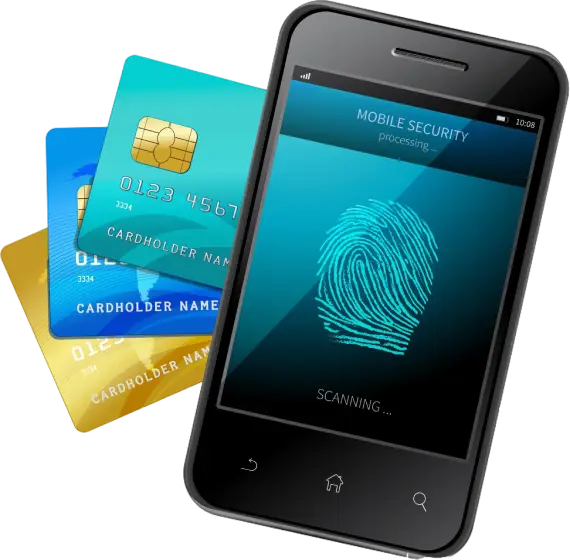
Simplify your payment experience by securely saving your card on our platform. After your initial transaction, you can choose to store your card details safely for future use. This feature eliminates the need to re-enter your payment information each time, making checkouts faster while keeping your data secure with advanced encryption and robust security measures.
Navigate to the “Save Card” section.
Click on “Add Card.”
Choose your preferred setup method.
Your card is now saved for future payments.
In the digital age, privacy concerns have become increasingly paramount, prompting the European Union to enact the General Data Protection Regulation (GDPR) in 2018. Among its many provisions, GDPR sets strict guidelines for the collection and processing of personal data, including the use of cookies on websites. Privacy Policy