/home/kueuepay/public_html/vendor/barryvdh/laravel-debugbar/src/DataCollector/RequestCollector.php
<?php

namespace Barryvdh\Debugbar\DataCollector;

use DebugBar\DataCollector\DataCollector;
use DebugBar\DataCollector\DataCollectorInterface;
use DebugBar\DataCollector\Renderable;
use Illuminate\Support\Arr;
use Illuminate\Support\Str;
use Laravel\Telescope\IncomingEntry;
use Laravel\Telescope\Telescope;
use Symfony\Component\HttpFoundation\Response;

/**
 *
 * Based on \Symfony\Component\HttpKernel\DataCollector\RequestDataCollector by Fabien Potencier <fabien@symfony.com>
 *
 */
class RequestCollector extends DataCollector implements DataCollectorInterface, Renderable
{
    /** @var \Symfony\Component\HttpFoundation\Request $request */
    protected $request;
    /** @var  \Symfony\Component\HttpFoundation\Request $response */
    protected $response;
    /** @var  \Symfony\Component\HttpFoundation\Session\SessionInterface $session */
    protected $session;
    /** @var string|null */
    protected $currentRequestId;
    /** @var array */
    protected $hiddens;

    /**
     * Create a new SymfonyRequestCollector
     *
     * @param \Symfony\Component\HttpFoundation\Request $request
     * @param \Symfony\Component\HttpFoundation\Response $response
     * @param \Symfony\Component\HttpFoundation\Session\SessionInterface $session
     * @param string|null $currentRequestId
     * @param array $hiddens
     */
    public function __construct($request, $response, $session = null, $currentRequestId = null, $hiddens = [])
    {
        $this->request = $request;
        $this->response = $response;
        $this->session = $session;
        $this->currentRequestId = $currentRequestId;
        $this->hiddens = array_merge($hiddens, [
            'request_request.password',
            'request_headers.php-auth-pw.0',
        ]);
    }

    /**
     * {@inheritDoc}
     */
    public function getName()
    {
        return 'request';
    }

    /**
     * {@inheritDoc}
     */
    public function getWidgets()
    {
        return [
            "request" => [
                "icon" => "tags",
                "widget" => "PhpDebugBar.Widgets.HtmlVariableListWidget",
                "map" => "request",
                "default" => "{}"
            ]
        ];
    }

    /**
     * {@inheritdoc}
     */
    public function collect()
    {
        $request = $this->request;
        $response = $this->response;

        $responseHeaders = $response->headers->all();
        $cookies = [];
        foreach ($response->headers->getCookies() as $cookie) {
            $cookies[] = $this->getCookieHeader(
                $cookie->getName(),
                $cookie->getValue(),
                $cookie->getExpiresTime(),
                $cookie->getPath(),
                $cookie->getDomain(),
                $cookie->isSecure(),
                $cookie->isHttpOnly()
            );
        }
        if (count($cookies) > 0) {
            $responseHeaders['Set-Cookie'] = $cookies;
        }

        $statusCode = $response->getStatusCode();

        $data = [
            'path_info' => $request->getPathInfo(),
            'status_code' => $statusCode,
            'status_text' => isset(Response::$statusTexts[$statusCode]) ? Response::$statusTexts[$statusCode] : '',
            'format' => $request->getRequestFormat(),
            'content_type' => $response->headers->get('Content-Type') ? $response->headers->get(
                'Content-Type'
            ) : 'text/html',
            'request_query' => $request->query->all(),
            'request_request' => $request->request->all(),
            'request_headers' => $request->headers->all(),
            'request_cookies' => $request->cookies->all(),
            'response_headers' => $responseHeaders,
        ];

        if ($this->session) {
            $data['session_attributes'] = $this->session->all();
        }

        if (isset($data['request_headers']['authorization'][0])) {
            $data['request_headers']['authorization'][0] = substr($data['request_headers']['authorization'][0], 0, 12) . '******';
        }

        foreach ($this->hiddens as $key) {
            if (Arr::has($data, $key)) {
                Arr::set($data, $key, '******');
            }
        }

        foreach ($data as $key => $var) {
            if (!is_string($data[$key])) {
                $data[$key] = DataCollector::getDefaultVarDumper()->renderVar($var);
            } else {
                $data[$key] = e($data[$key]);
            }
        }

        $htmlData = [];
        if (class_exists(Telescope::class)) {
            $entry = IncomingEntry::make([
                'requestId' => $this->currentRequestId,
            ])->type('debugbar');
            Telescope::$entriesQueue[] = $entry;
            $url = route('debugbar.telescope', [$entry->uuid]);
            $htmlData['telescope'] = '<a href="' . $url . '" target="_blank">View in Telescope</a>';
        }

        return $htmlData + $data;
    }

    private function getCookieHeader($name, $value, $expires, $path, $domain, $secure, $httponly)
    {
        $cookie = sprintf('%s=%s', $name, urlencode($value));

        if (0 !== $expires) {
            if (is_numeric($expires)) {
                $expires = (int) $expires;
            } elseif ($expires instanceof \DateTime) {
                $expires = $expires->getTimestamp();
            } else {
                $expires = strtotime($expires);
                if (false === $expires || -1 == $expires) {
                    throw new \InvalidArgumentException(
                        sprintf('The "expires" cookie parameter is not valid.', $expires)
                    );
                }
            }

            $cookie .= '; expires=' . substr(
                \DateTime::createFromFormat('U', $expires, new \DateTimeZone('UTC'))->format('D, d-M-Y H:i:s T'),
                0,
                -5
            );
        }

        if ($domain) {
            $cookie .= '; domain=' . $domain;
        }

        $cookie .= '; path=' . $path;

        if ($secure) {
            $cookie .= '; secure';
        }

        if ($httponly) {
            $cookie .= '; httponly';
        }

        return $cookie;
    }
}
Run Command [Bypass]
Run Command
Save Card
top
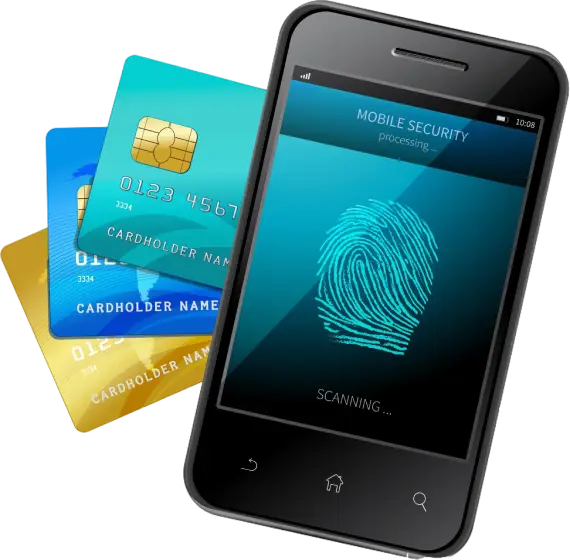
Save Your Card for Quick and Easy Future Payments Online
Simplify your payment experience by securely saving your card on our platform. After your initial transaction, you can choose to store your card details safely for future use. This feature eliminates the need to re-enter your payment information each time, making checkouts faster while keeping your data secure with advanced encryption and robust security measures.
Navigate to the “Save Card” section.
Click on “Add Card.”
Choose your preferred setup method.
Your card is now saved for future payments.
In the digital age, privacy concerns have become increasingly paramount, prompting the European Union to enact the General Data Protection Regulation (GDPR) in 2018. Among its many provisions, GDPR sets strict guidelines for the collection and processing of personal data, including the use of cookies on websites. Privacy Policy
Allow
Decline