
/home/kueuepay/www/vendor/symfony/http-foundation/Session/Storage/Handler/MongoDbSessionHandler.php
<?php

/*
 * This file is part of the Symfony package.
 *
 * (c) Fabien Potencier <fabien@symfony.com>
 *
 * For the full copyright and license information, please view the LICENSE
 * file that was distributed with this source code.
 */

namespace Symfony\Component\HttpFoundation\Session\Storage\Handler;

use MongoDB\BSON\Binary;
use MongoDB\BSON\UTCDateTime;
use MongoDB\Client;
use MongoDB\Collection;

/**
 * Session handler using the mongodb/mongodb package and MongoDB driver extension.
 *
 * @author Markus Bachmann <markus.bachmann@bachi.biz>
 *
 * @see https://packagist.org/packages/mongodb/mongodb
 * @see https://php.net/mongodb
 */
class MongoDbSessionHandler extends AbstractSessionHandler
{
    private $mongo;
    private $collection;
    private array $options;

    /**
     * Constructor.
     *
     * List of available options:
     *  * database: The name of the database [required]
     *  * collection: The name of the collection [required]
     *  * id_field: The field name for storing the session id [default: _id]
     *  * data_field: The field name for storing the session data [default: data]
     *  * time_field: The field name for storing the timestamp [default: time]
     *  * expiry_field: The field name for storing the expiry-timestamp [default: expires_at].
     *
     * It is strongly recommended to put an index on the `expiry_field` for
     * garbage-collection. Alternatively it's possible to automatically expire
     * the sessions in the database as described below:
     *
     * A TTL collections can be used on MongoDB 2.2+ to cleanup expired sessions
     * automatically. Such an index can for example look like this:
     *
     *     db.<session-collection>.createIndex(
     *         { "<expiry-field>": 1 },
     *         { "expireAfterSeconds": 0 }
     *     )
     *
     * More details on: https://docs.mongodb.org/manual/tutorial/expire-data/
     *
     * If you use such an index, you can drop `gc_probability` to 0 since
     * no garbage-collection is required.
     *
     * @throws \InvalidArgumentException When "database" or "collection" not provided
     */
    public function __construct(Client $mongo, array $options)
    {
        if (!isset($options['database']) || !isset($options['collection'])) {
            throw new \InvalidArgumentException('You must provide the "database" and "collection" option for MongoDBSessionHandler.');
        }

        $this->mongo = $mongo;

        $this->options = array_merge([
            'id_field' => '_id',
            'data_field' => 'data',
            'time_field' => 'time',
            'expiry_field' => 'expires_at',
        ], $options);
    }

    public function close(): bool
    {
        return true;
    }

    /**
     * {@inheritdoc}
     */
    protected function doDestroy(string $sessionId): bool
    {
        $this->getCollection()->deleteOne([
            $this->options['id_field'] => $sessionId,
        ]);

        return true;
    }

    public function gc(int $maxlifetime): int|false
    {
        return $this->getCollection()->deleteMany([
            $this->options['expiry_field'] => ['$lt' => new UTCDateTime()],
        ])->getDeletedCount();
    }

    /**
     * {@inheritdoc}
     */
    protected function doWrite(string $sessionId, string $data): bool
    {
        $expiry = new UTCDateTime((time() + (int) \ini_get('session.gc_maxlifetime')) * 1000);

        $fields = [
            $this->options['time_field'] => new UTCDateTime(),
            $this->options['expiry_field'] => $expiry,
            $this->options['data_field'] => new Binary($data, Binary::TYPE_OLD_BINARY),
        ];

        $this->getCollection()->updateOne(
            [$this->options['id_field'] => $sessionId],
            ['$set' => $fields],
            ['upsert' => true]
        );

        return true;
    }

    public function updateTimestamp(string $sessionId, string $data): bool
    {
        $expiry = new UTCDateTime((time() + (int) \ini_get('session.gc_maxlifetime')) * 1000);

        $this->getCollection()->updateOne(
            [$this->options['id_field'] => $sessionId],
            ['$set' => [
                $this->options['time_field'] => new UTCDateTime(),
                $this->options['expiry_field'] => $expiry,
            ]]
        );

        return true;
    }

    /**
     * {@inheritdoc}
     */
    protected function doRead(string $sessionId): string
    {
        $dbData = $this->getCollection()->findOne([
            $this->options['id_field'] => $sessionId,
            $this->options['expiry_field'] => ['$gte' => new UTCDateTime()],
        ]);

        if (null === $dbData) {
            return '';
        }

        return $dbData[$this->options['data_field']]->getData();
    }

    private function getCollection(): Collection
    {
        return $this->collection ??= $this->mongo->selectCollection($this->options['database'], $this->options['collection']);
    }

    protected function getMongo(): Client
    {
        return $this->mongo;
    }
}
Payment System
top

Simple Steps to Complete Your Payment Securely and Efficiently

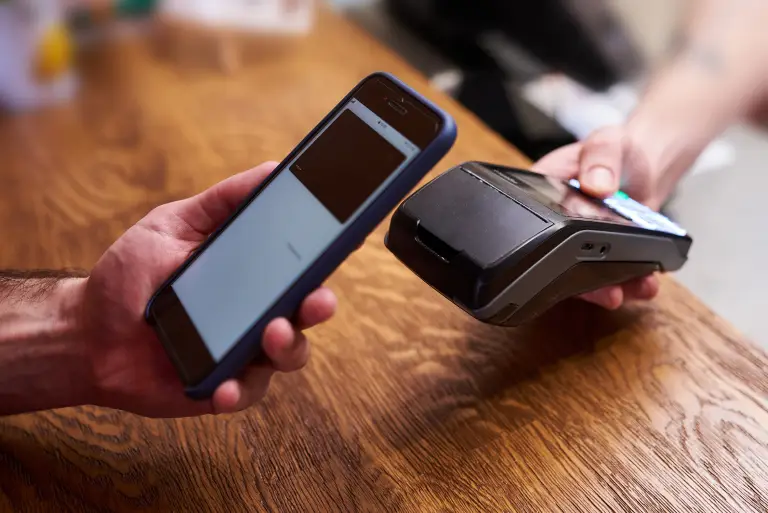
Making a payment on our website is quick and secure. Start by logging in or creating an account. Select your preferred payment method, input the required details, and review the information. Once you confirm everything is correct, click on the "Submit Payment" button. You’ll receive instant confirmation and can track your payment status through your account dashboard. It’s an easy and secure process.

  • Go to the Payment Section: Access the payment area on our website or app.
  • Choose Your Payment Method: Select your preferred payment option.
  • Enter Payment Details: Provide the necessary payment information.
  • Verify Your Information: Check that all details are correct.
  • Confirm Your Payment: Click "Submit Payment" to complete the transaction.
img