

/home/kueuepay/public_html/vendor/laravel/serializable-closure/README.md
# Serializable Closure

<a href="https://github.com/laravel/serializable-closure/actions">
    <img src="https://github.com/laravel/serializable-closure/workflows/tests/badge.svg" alt="Build Status">
</a>
<a href="https://packagist.org/packages/laravel/serializable-closure">
    <img src="https://img.shields.io/packagist/dt/laravel/serializable-closure" alt="Total Downloads">
</a>
<a href="https://packagist.org/packages/laravel/serializable-closure">
    <img src="https://img.shields.io/packagist/v/laravel/serializable-closure" alt="Latest Stable Version">
</a>
<a href="https://packagist.org/packages/laravel/serializable-closure">
    <img src="https://img.shields.io/packagist/l/laravel/serializable-closure" alt="License">
</a>

## Introduction

> This project is a fork of the excellent [opis/closure: 3.x](https://github.com/opis/closure) package. At Laravel, we decided to fork this package as the upcoming version [4.x](https://github.com/opis/closure) is a complete rewrite on top of the [FFI extension](https://www.php.net/manual/en/book.ffi.php). As Laravel is a web framework, and FFI is not enabled by default in web requests, this fork allows us to keep using the `3.x` series while adding support for new PHP versions.

Laravel Serializable Closure provides an easy and secure way to **serialize closures in PHP**.

## Official Documentation

### Installation

> **Requires [PHP 7.4+](https://php.net/releases/)**

First, install Laravel Serializable Closure via the [Composer](https://getcomposer.org/) package manager:

```bash
composer require laravel/serializable-closure
```

### Usage

You may serialize a closure this way:

```php
use Laravel\SerializableClosure\SerializableClosure;

$closure = fn () => 'james';

// Recommended
SerializableClosure::setSecretKey('secret');

$serialized = serialize(new SerializableClosure($closure));
$closure = unserialize($serialized)->getClosure();

echo $closure(); // james;
```

### Caveats

* Anonymous classes cannot be created within closures.
* Attributes cannot be used within closures.
* Serializing closures on REPL environments like Laravel Tinker is not supported.
* Serializing closures that reference objects with readonly properties is not supported.

## Contributing

Thank you for considering contributing to Serializable Closure! The contribution guide can be found in the [Laravel documentation](https://laravel.com/docs/contributions).

## Code of Conduct

In order to ensure that the Laravel community is welcoming to all, please review and abide by the [Code of Conduct](https://laravel.com/docs/contributions#code-of-conduct).

## Security Vulnerabilities

Please review [our security policy](https://github.com/laravel/serializable-closure/security/policy) on how to report security vulnerabilities.

## License

Serializable Closure is open-sourced software licensed under the [MIT license](LICENSE.md).
Journal Details
top
blog

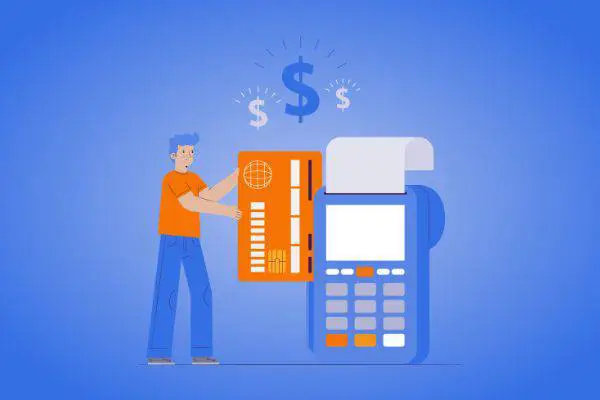
Enhancing Payment Security: The Role of Encryption and Tokenization in Digital Transactions

As digital transactions proliferate, ensuring robust payment security is more critical than ever. Two foundational technologies that are pivotal in this effort are encryption and tokenization.
Encryption is a process that transforms data into a secure format, known as ciphertext, which can only be deciphered using a specific decryption key. This means that even if data is intercepted during transmission, it remains unreadable and protected from unauthorized access. Encryption is essential in safeguarding sensitive payment information, such as credit card details and personal data, during online transactions.
Tokenization, on the other hand, involves substituting sensitive data with unique identifiers or "tokens." These tokens serve as placeholders and have no value outside of the specific transaction context. If intercepted, tokens are meaningless and cannot be used to access the original sensitive data. This method significantly reduces the risk of fraud and data breaches, as the actual payment information is not stored or transmitted.
Together, encryption and tokenization form a powerful security framework. Encryption ensures that data is protected during transmission, while tokenization minimizes the risk of exposing sensitive information by replacing it with secure, non-sensitive tokens.
These technologies are integral to modern payment platforms, providing a robust defense against cyber threats. By implementing advanced encryption and tokenization techniques, businesses can enhance the security of digital transactions, ensuring that users' financial and personal information remains safe. This comprehensive approach not only builds user trust but also fortifies the overall security infrastructure of digital payment systems. As cyber threats evolve, the continued advancement of encryption and tokenization will be crucial in maintaining secure and reliable payment processes.

Tags