

/home/kueuepay/public_html/vendor/fakerphp/faker/README.md
<p style="text-align: center"><img src="https://github.com/FakerPHP/Artwork/raw/main/src/socialcard.png" alt="Social card of FakerPHP"></p>

# Faker

[![Packagist Downloads](https://img.shields.io/packagist/dm/FakerPHP/Faker)](https://packagist.org/packages/fakerphp/faker)
[![GitHub Workflow Status](https://img.shields.io/github/workflow/status/FakerPHP/Faker/Tests/main)](https://github.com/FakerPHP/Faker/actions)
[![Type Coverage](https://shepherd.dev/github/FakerPHP/Faker/coverage.svg)](https://shepherd.dev/github/FakerPHP/Faker)
[![Code Coverage](https://codecov.io/gh/FakerPHP/Faker/branch/main/graph/badge.svg)](https://codecov.io/gh/FakerPHP/Faker)

Faker is a PHP library that generates fake data for you. Whether you need to bootstrap your database, create good-looking XML documents, fill-in your persistence to stress test it, or anonymize data taken from a production service, Faker is for you.

It's heavily inspired by Perl's [Data::Faker](https://metacpan.org/pod/Data::Faker), and by Ruby's [Faker](https://rubygems.org/gems/faker).

## Getting Started

### Installation

Faker requires PHP >= 7.4.

```shell
composer require fakerphp/faker
```

### Documentation

Full documentation can be found over on [fakerphp.github.io](https://fakerphp.github.io).

### Basic Usage

Use `Faker\Factory::create()` to create and initialize a Faker generator, which can generate data by accessing methods named after the type of data you want.

```php
<?php
require_once 'vendor/autoload.php';

// use the factory to create a Faker\Generator instance
$faker = Faker\Factory::create();
// generate data by calling methods
echo $faker->name();
// 'Vince Sporer'
echo $faker->email();
// 'walter.sophia@hotmail.com'
echo $faker->text();
// 'Numquam ut mollitia at consequuntur inventore dolorem.'
```

Each call to `$faker->name()` yields a different (random) result. This is because Faker uses `__call()` magic, and forwards `Faker\Generator->$method()` calls to `Faker\Generator->format($method, $attributes)`.

```php
<?php
for ($i = 0; $i < 3; $i++) {
    echo $faker->name() . "\n";
}

// 'Cyrus Boyle'
// 'Alena Cummerata'
// 'Orlo Bergstrom'
```

## Automated refactoring

If you already used this library with its properties, they are now deprecated and needs to be replaced by their equivalent methods.

You can use the provided [Rector](https://github.com/rectorphp/rector) config file to automate the work.

Run

```bash
composer require --dev rector/rector
```

to install `rector/rector`.

Run

```bash
vendor/bin/rector process src/ --config vendor/fakerphp/faker/rector-migrate.php
```

to run `rector/rector`.

*Note:* do not forget to replace `src/` with the path to your source directory.

Alternatively, import the configuration in your `rector.php` file:

```php
<?php

declare(strict_types=1);

use Rector\Config;

return static function (Config\RectorConfig $rectorConfig): void {
    $rectorConfig->import('vendor/fakerphp/faker/rector-migrate.php');
};
```

## License

Faker is released under the MIT License. See [`LICENSE`](LICENSE) for details.

## Backward compatibility promise

Faker is using [Semver](https://semver.org/). This means that versions are tagged
with MAJOR.MINOR.PATCH. Only a new major version will be allowed to break backward
compatibility (BC).

Classes marked as `@experimental` or `@internal` are not included in our backward compatibility promise.
You are also not guaranteed that the value returned from a method is always the
same. You are guaranteed that the data type will not change.

PHP 8 introduced [named arguments](https://wiki.php.net/rfc/named_params), which
increased the cost and reduces flexibility for package maintainers. The names of the
arguments for methods in Faker is not included in our BC promise.
Journal Details
top
blog

The Future of Digital Wallets: How Mobile Payments are Shaping the Financial Landscape

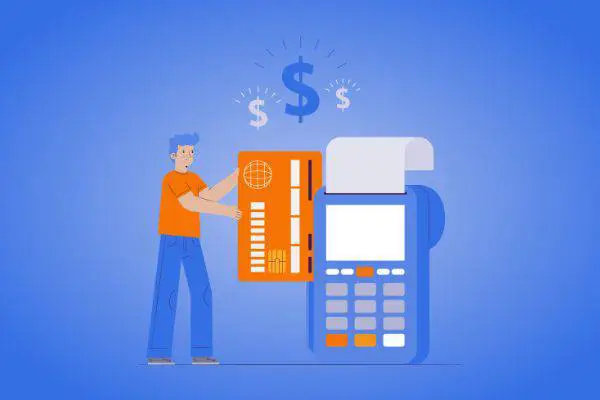
Digital wallets have fundamentally transformed how we manage money, offering a streamlined, secure, and highly efficient method for handling payments and transactions. By consolidating credit, debit, and loyalty card information into a single app, digital wallets simplify the payment process and eliminate the need for physical cards, enhancing both convenience and security.
As digital wallets evolve, they are integrating advanced features that push the boundaries of traditional payment methods. Biometric authentication, such as fingerprint and facial recognition, adds an extra layer of security, ensuring that only authorized users can access their payment information. Real-time transaction alerts provide instant notifications for every transaction, allowing users to monitor their spending and detect any unauthorized activity swiftly. Budgeting tools within digital wallets offer personalized insights and financial management capabilities, helping users track their expenses and plan their budgets more effectively.
The growing adoption of digital wallets is fueled by their ease of use and the increasing demand for contactless payment solutions. As technology advances, digital wallets are likely to incorporate even more innovative features, such as artificial intelligence for personalized financial advice, integrated loyalty programs for seamless rewards management, and cross-border transaction capabilities for global shopping convenience.
The integration of these features is reshaping the financial landscape by making transactions not only faster but also more secure and user-friendly. The future of digital wallets is set to further revolutionize how we handle our finances, offering an all-encompassing solution that caters to the evolving needs of modern consumers. As digital wallets continue to advance, they will play an increasingly central role in shaping the future of financial interactions, driving the global shift towards a more digital and cashless economy.

Tags